Antoine Mortier (1908–1999)
Belgian painter, draftsman, and sculptor active in the postwar period, associated with European lyrical abstraction.
The Roots (1908–1940)
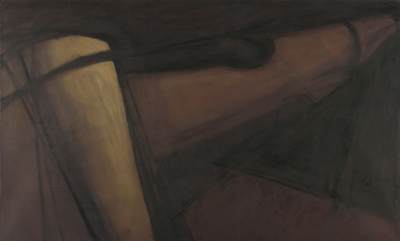
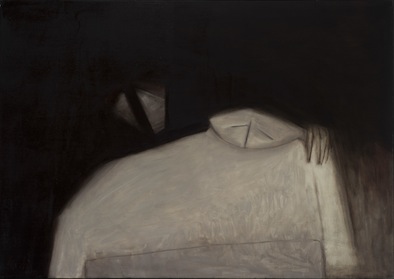
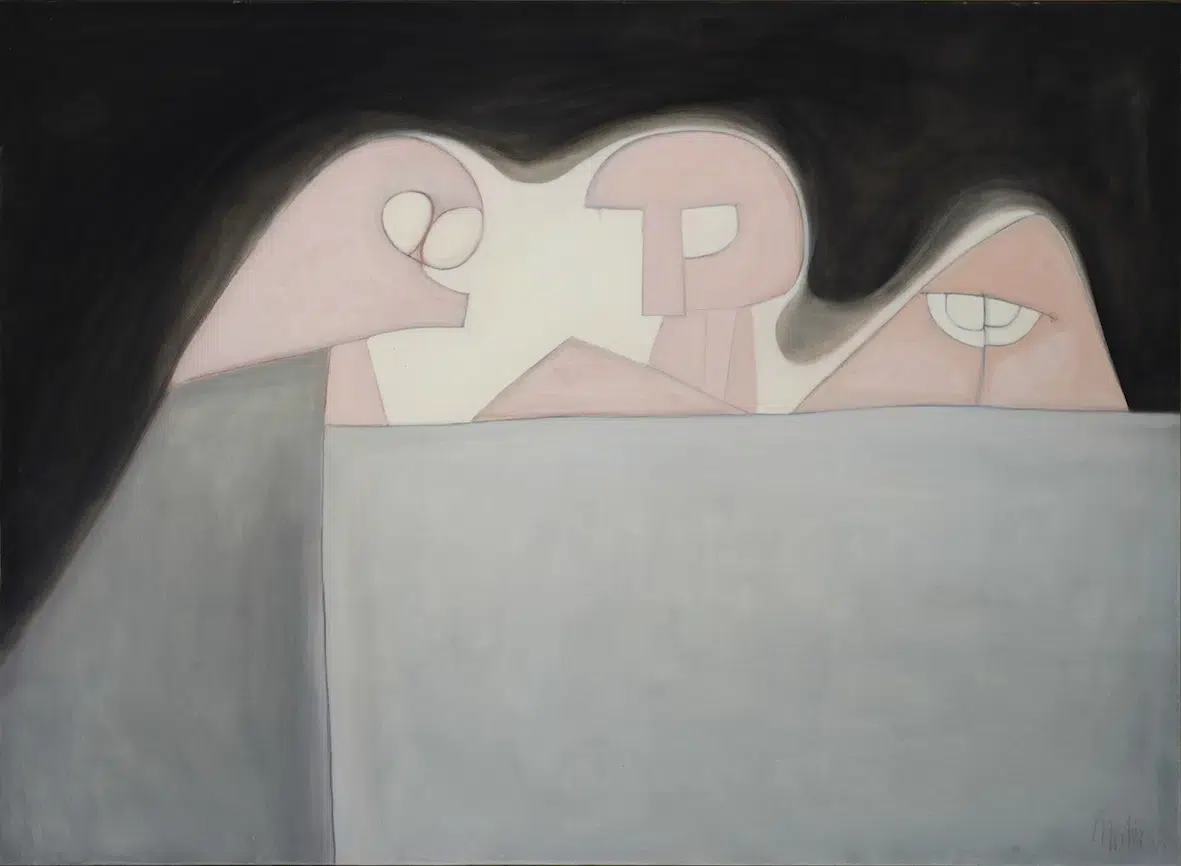
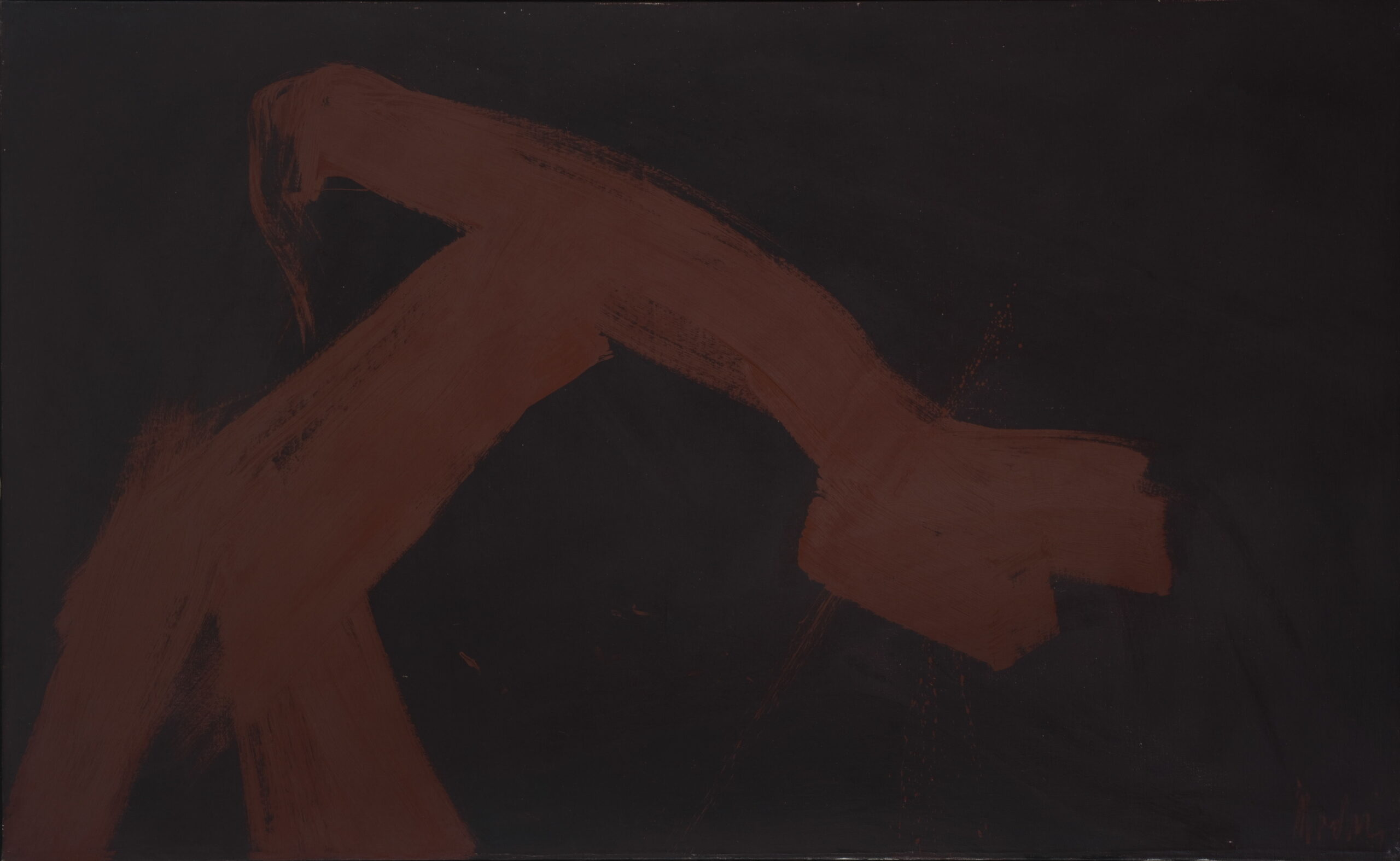
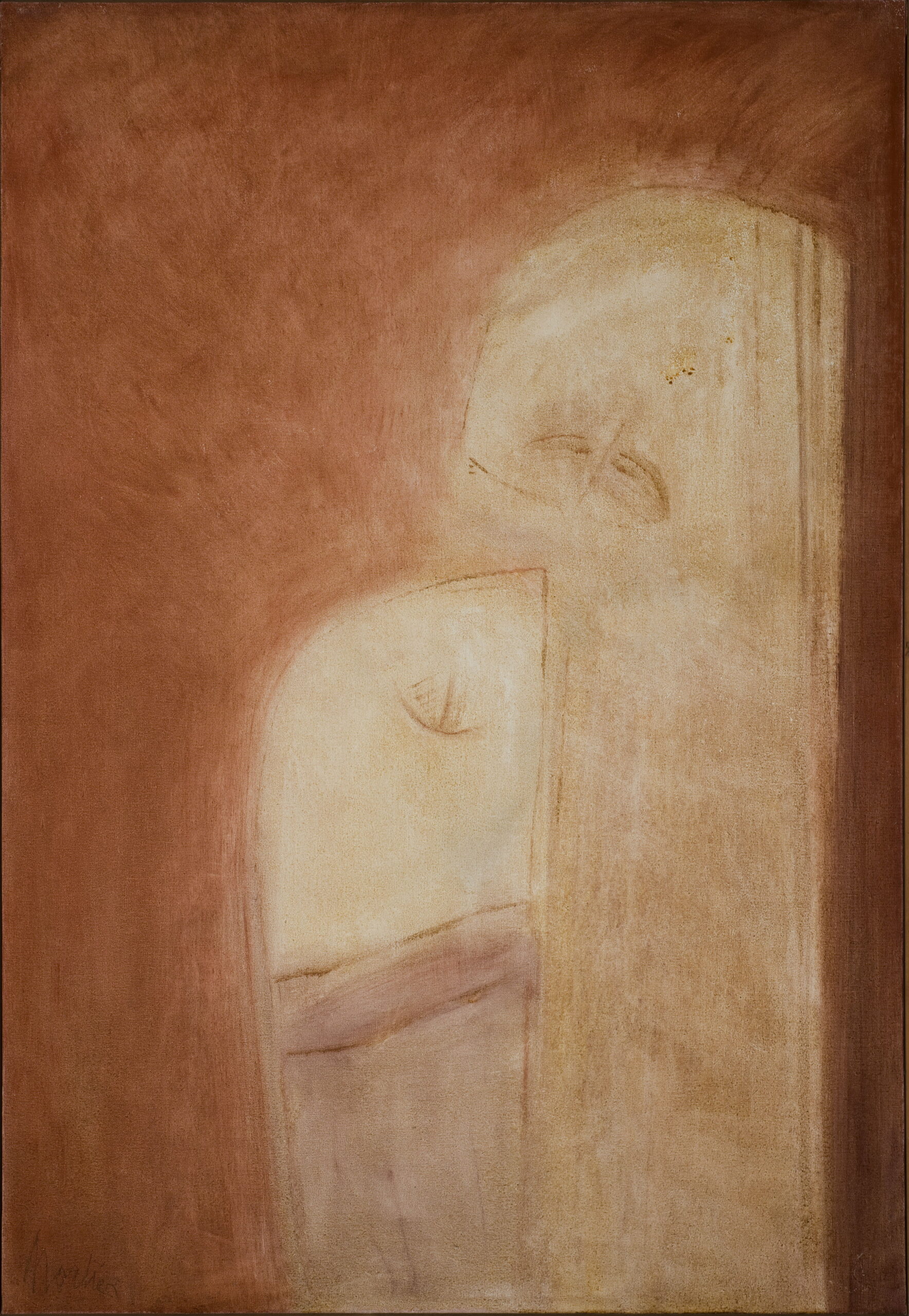
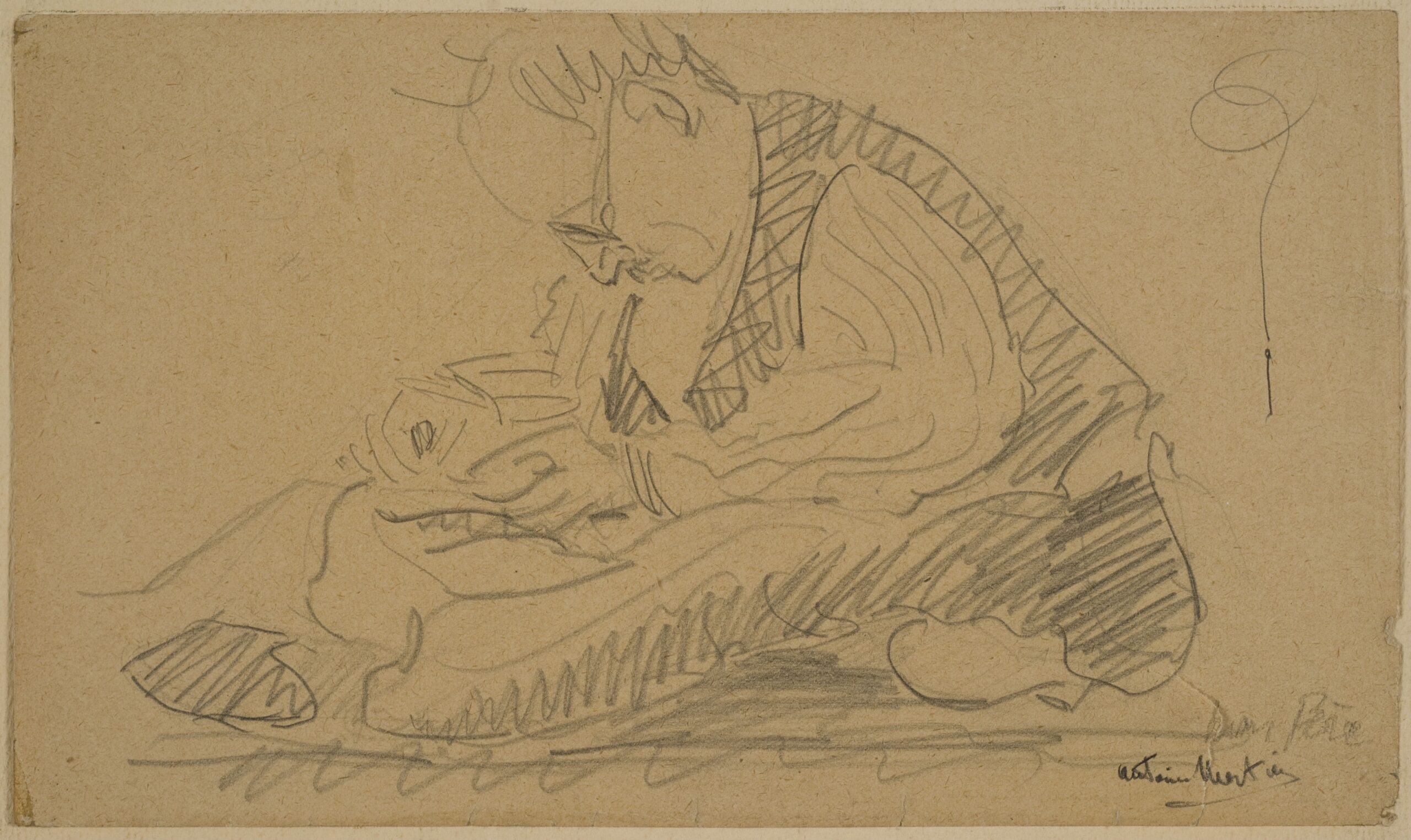
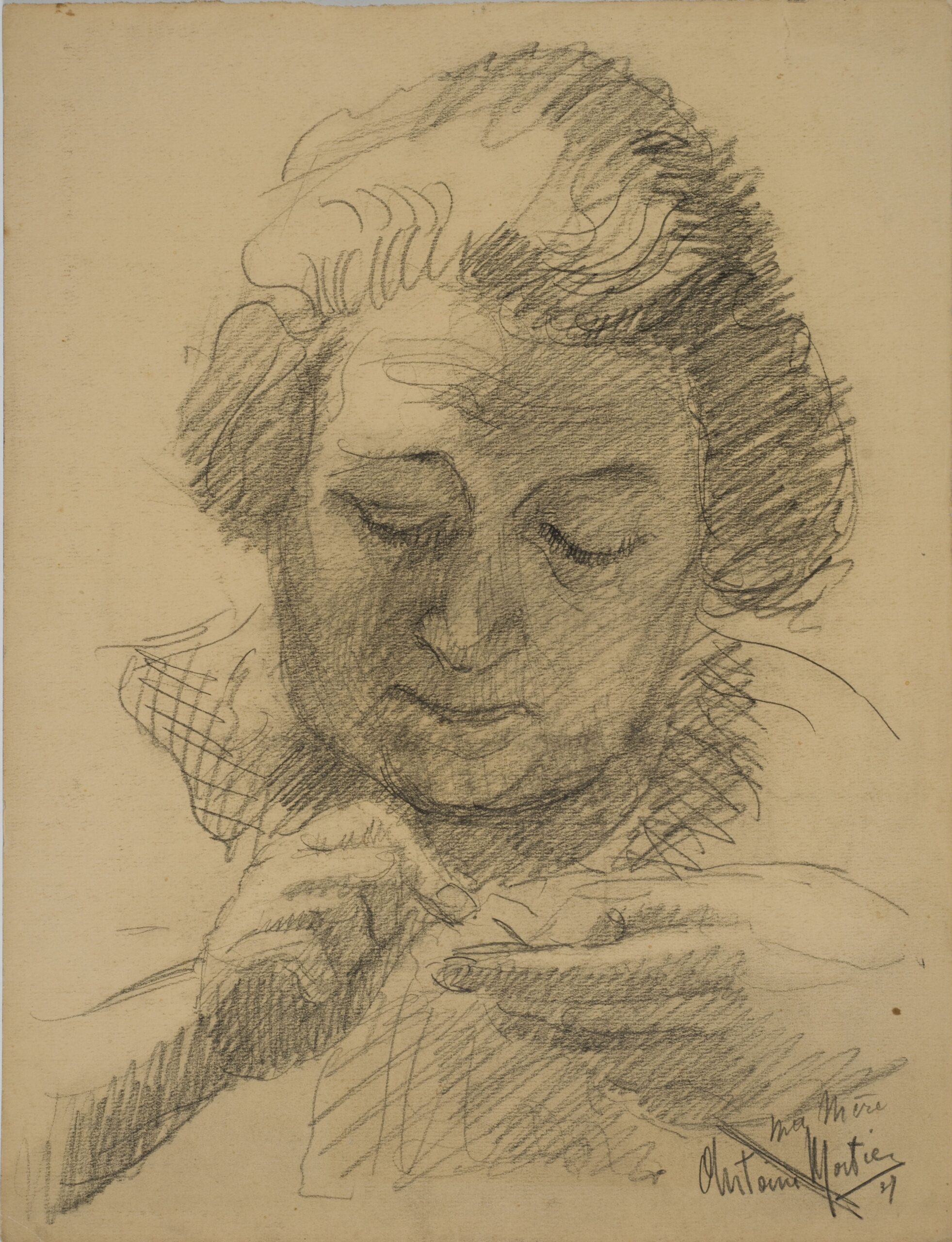
Born in Saint-Gilles-lez-Bruxelles on October 2, 1908, his early childhood was shaped by the echoes of World War I (1914–1918), his father’s tailor shop, and his mother’s colorful studio—she was a floral designer. Through their work as artisans, both parents provided him with the essential foundations of creativity: one, the organization of the surface; the other, the richness and rarity of natural tones; and together, the technical demands of the material fig. 1 fig. 2.
At the age of 15, he became an apprentice at an ornamental sculpture workshop in Woluwe-Saint-Lambert, where he worked until 1927. At the same time, he trained as a furrier at the Baudewijn fur house on Rue de la Victoire in Saint-Gilles. This apprenticeship ensured he could make a living.
He attended evening classes at the Academy of Fine Arts in Brussels as a non-matriculated student (in the sections on modeling, ornamentation, perspective, aesthetics, and drawing from classical models) and consulted anatomical illustrations in the library to study the human body’s structure.
In October 1928, he was drafted into the 10th Line Regiment in Arlon to serve as an observer. For ten months, he produced one drawing after another; his hands sketched out the space, determined distances, and captured strategic details.
Upon his return to civilian life, he resumed his work as a furrier and, in the evenings, returned to sculpture by attending the Académie de Saint-Josse-ten-Noode from 1934 to 1936. A student of Gustave Fontaine, he won first prize in classical sculpture and second prize in life drawing. Henri Ottevaere, director of the Académie de Saint-Josse, encouraged him in his early attempts at painting, which focused primarily on landscapes and still lifes. Notable aspects of his work at that time included his composition, the construction of the landscape and space, and his exploration of color.
The year 1937 was significant on a personal level. While working as a seasonal apprentice furrier at the Natan fur house on Avenue Louise in Brussels, he met Emilienne Lempereur, the head seamstress in the haute couture atelier. It was love at first sight, and the couple married on July 24, 1937. They had two daughters. A constant source of support throughout his artistic career, Emilienne embodied all the qualities of a modern woman: independent, hardworking, and entrepreneurial.
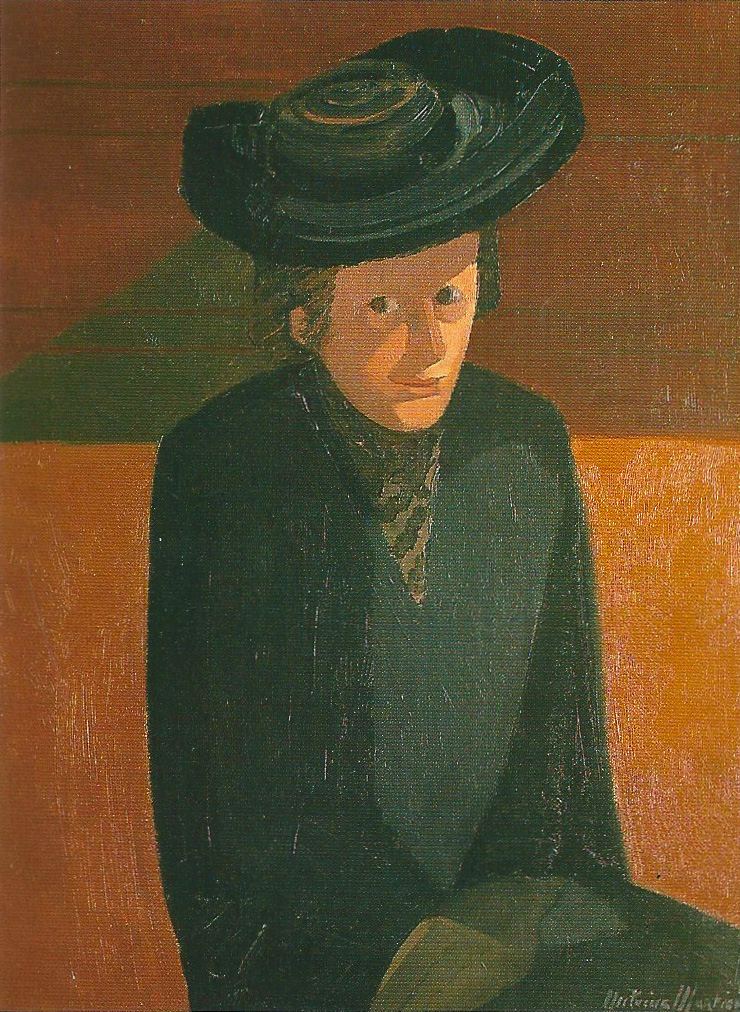
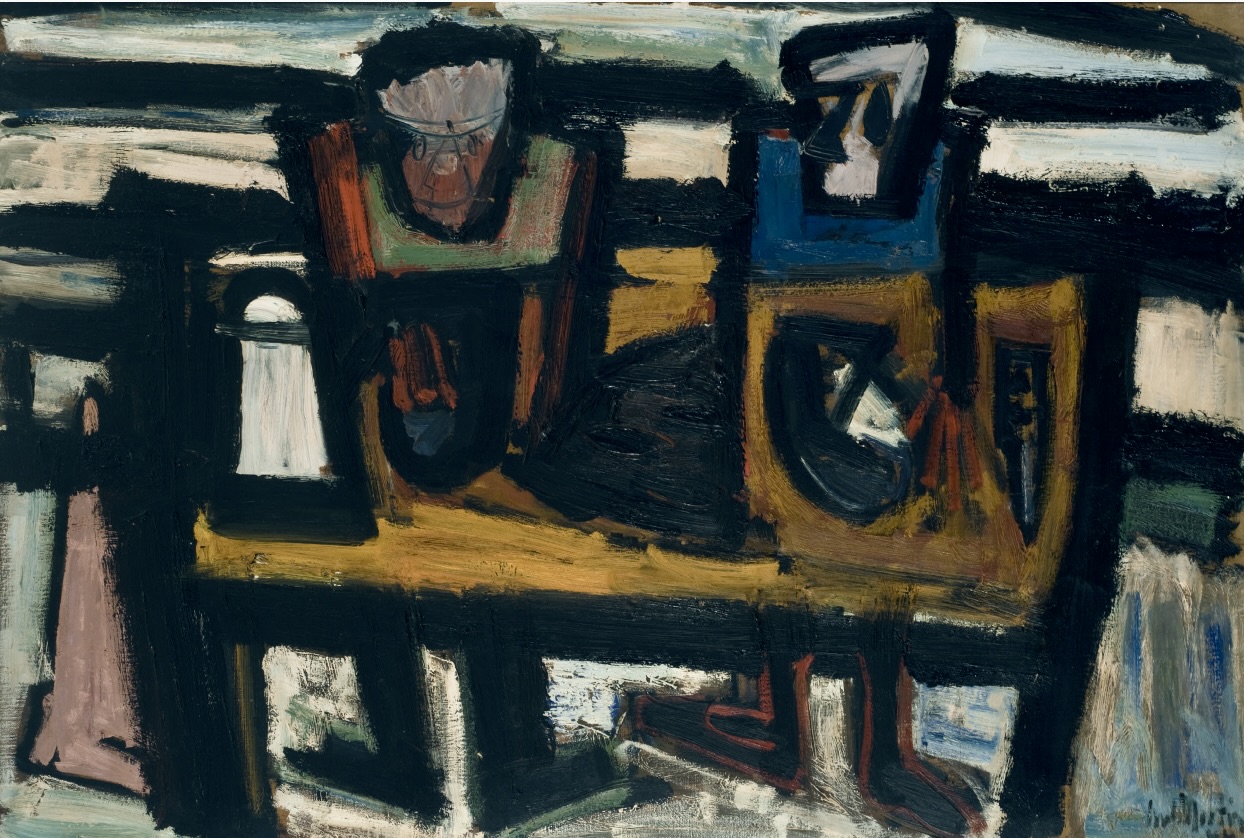
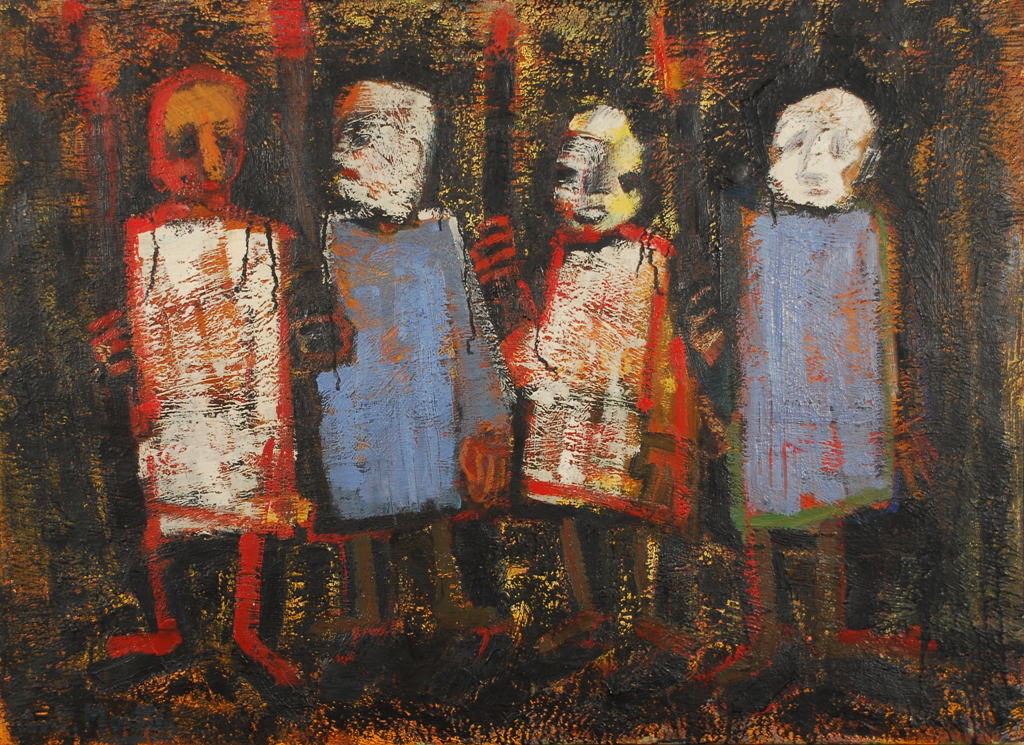
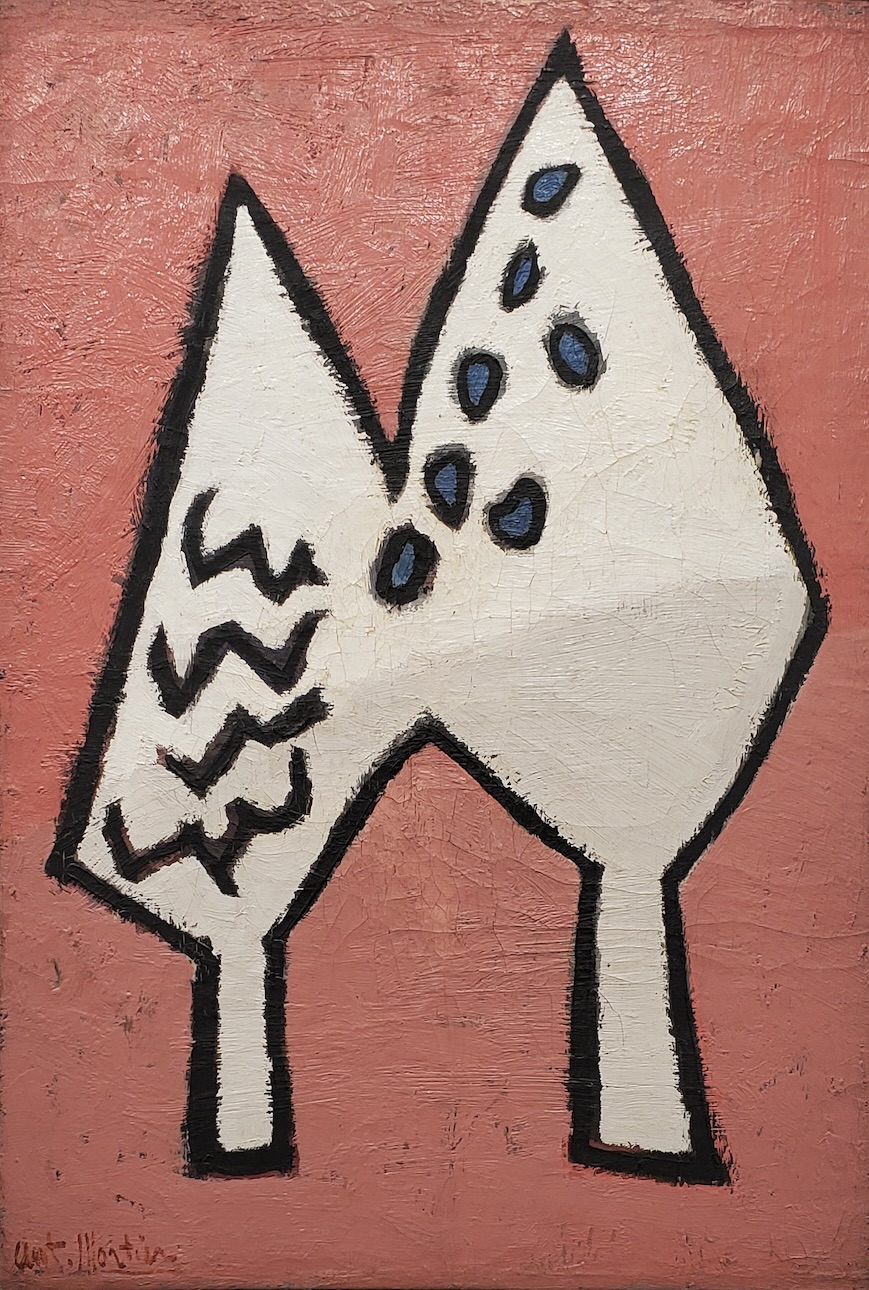
Called up for duty during the Chamberlain-Hitler meeting in 1938, Mortier returned to the front lines. A necessary surgical procedure gave him the opportunity to return home in 1940. In the evenings, he took singing and music lessons at the Saint-Josse-ten-Noode Music Academy and also attended the open studio in Woluwe-Saint-Lambert led by Edgard Tytgat. Having honed his voice, as soon as he recovered, he applied in 1940 for a position as a chorus member at the Théâtre royal de la Monnaie. He remained there until 1947 fig. 3 fig. 4 fig. 5 fig. 6.
Through the repertoire of operas such as *Faust*, *Carmen*, *The Flying Dutchman*, *Thaïs*, and *Aida*, he experienced the dramas of life, religion, and glory, while the backstage world provided him with the themes for his early works. The overall atmosphere instilled in him a dramatic style of writing. He no longer had any doubts about his artistic calling. [See [Analysis: Antoine Mortier and Opera].
Key Encounters (1940–1950)
During the first five years of the 1940s, the die was cast! The body of work took shape and was set in stone for the present and the future. The artist’s obsession with the subject shifted from the figurative to the disfiguring. The mark dictates the intensity of the impact, the color, and the depth of the resonance.
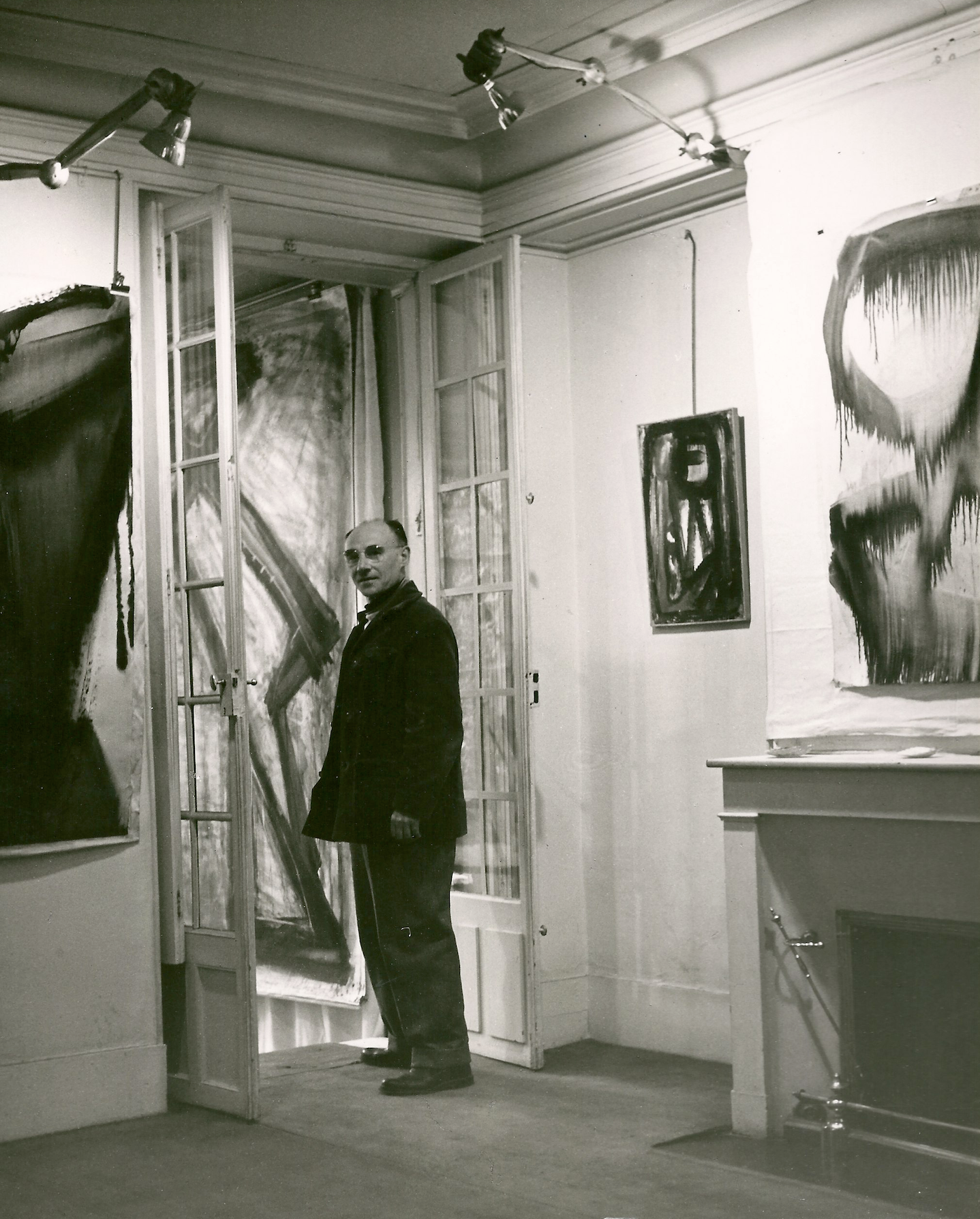
Corneil de Thoran, director of the Théâtre Royal de la Monnaie, encouraged him, supported him, and appreciated him. “L’Homme” was a regular at the Galerie Apollo in Brussels, with which he put the artist in contact. Robert Delevoy, the gallery’s director, played an important role in the art world of the time; he invited Mortier to participate in the 1944 Salon Apport at the Apollo Gallery and, shortly thereafter, invited him in January 1946 to hold his first solo exhibition there fig. 7 fig. 8 fig. 9 fig. 10. There, the artist sold a landscape painting to an American soldier on leave!
In the overview of his book *La Jeune Peinture belge*, published by Formes in Brussels and Paris in 1946, Delevoy writes:
“Antoine Mortier reveals to us a more balanced, healthier nature—the true temperament of a painter. His work stands out for the boldness of its color palette, the beautiful resonance of its texture, and the simplicity of its subjects. Fiercely independent, this young artist is developing—in the solitude of a Brussels attic, slowly but also with faith, courage, and determination—a body of work of singular depth. Perhaps no one within the Young Belgian School has a greater sense of tactile qualities than he does.
Antoine Mortier became a member of the Jeune Peinture Belge in March 1946 and participated in the group’s exhibitions in Paris and Amsterdam; yet the artist was still searching for his own voice, analyzing his work, refusing any compromise, and, from the outset, rejecting any association with a group.
In November 1946, he resigned, feeling that its members were too subservient to the painters of the École de Paris. The experience left him bitter, furious, and rebellious.
Corneil de Thoran introduced him to the leading figures of the time: Robert Giron, director of the Palais des Beaux-Arts in Brussels; Paul Fierens, curator of the Royal Museums of Fine Arts of Belgium; art lovers Oscar Schellekens, Karel Geirlandt, and Gustave Van Geluwe, a renowned tailor on Rue Royale in Brussels.
Mortier met regularly with the tailor, either at his showrooms or at his villa in Boitsfort, where the artist discovered the works of the leading Flemish Expressionists—Permeke, Wouters, and Brusselmans—as well as sculptures by the Austrian and Russian artists Wotruba and Zadkine.
In late 1947, Antoine Mortier left the Monnaie. With continued encouragement from his director, de Thoran, he devoted himself fully to painting fig. 11.
Robert Giron invited Mortier to organize his first solo exhibition at the Palais des Beaux-Arts in Brussels in May 1949. His gestural expressionism unsettled the public, while his work caught the critics’ attention.
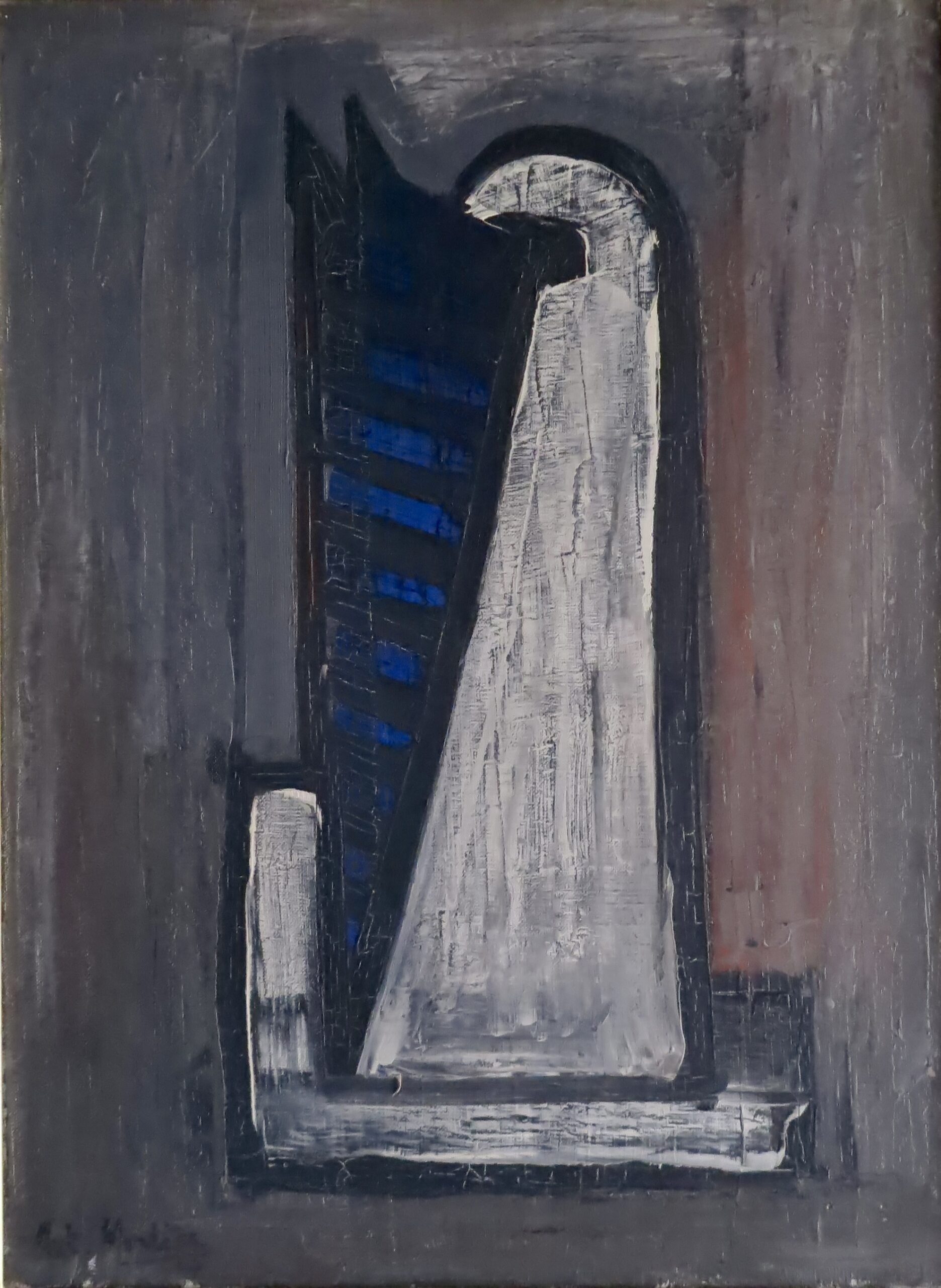
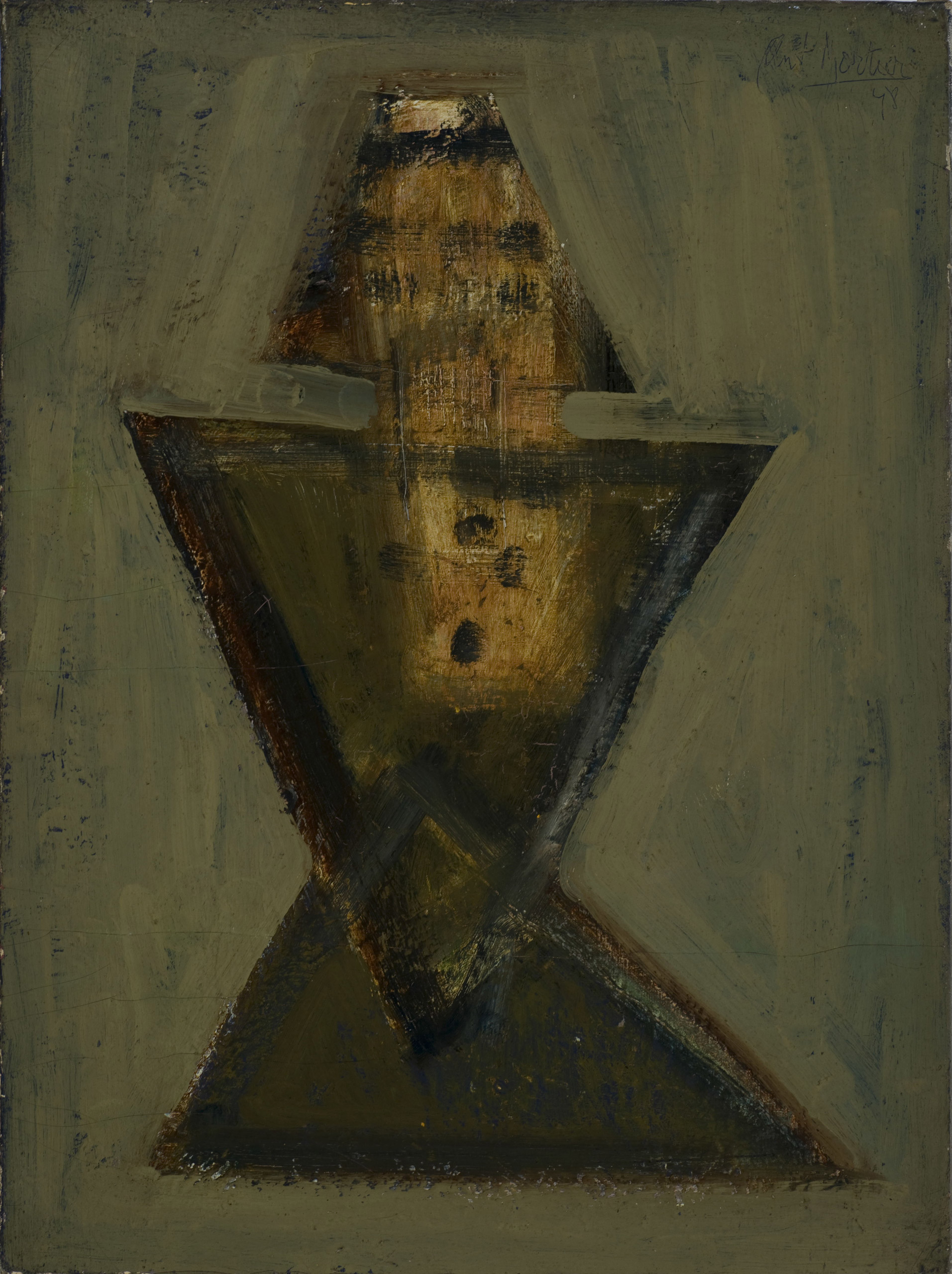
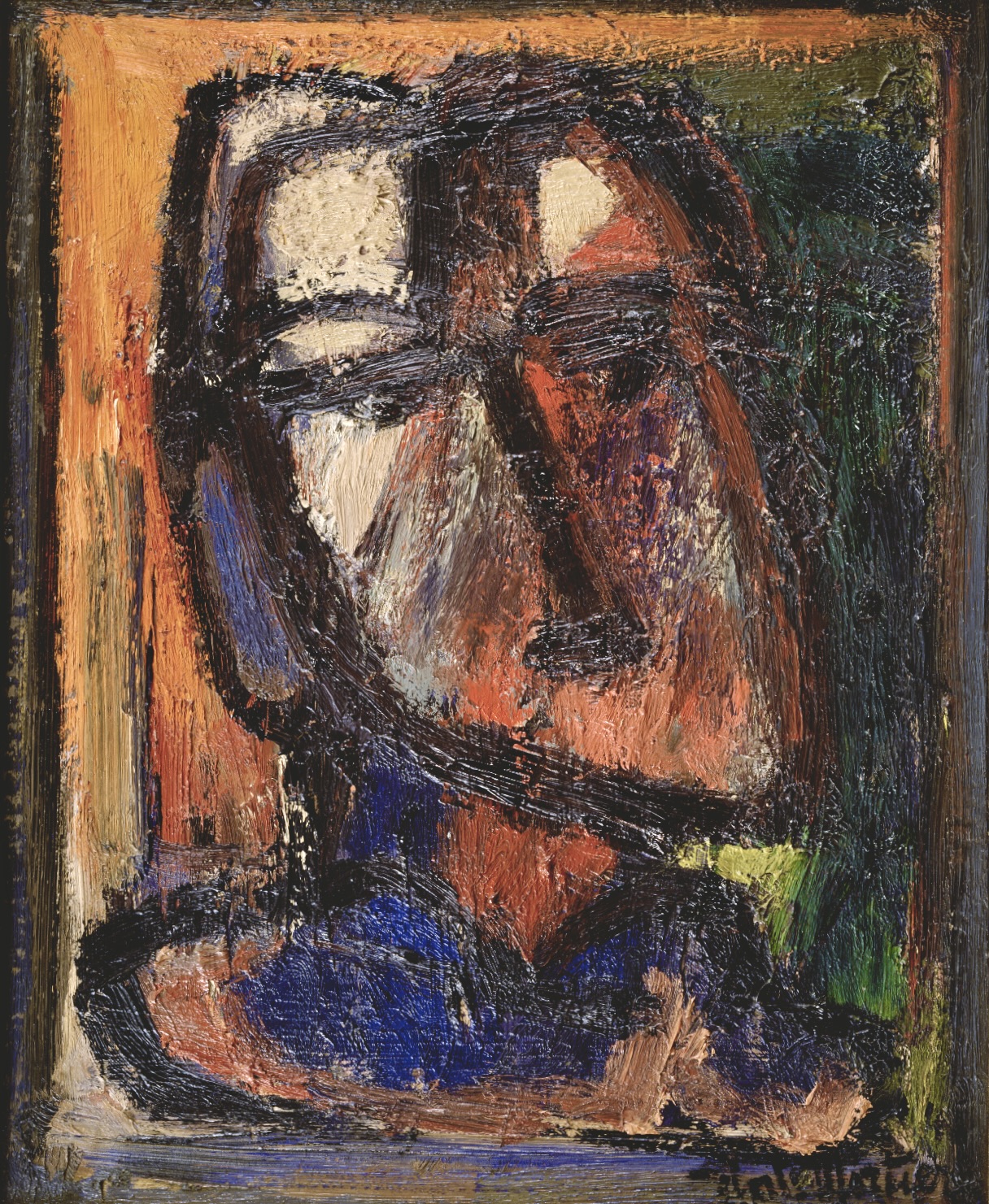
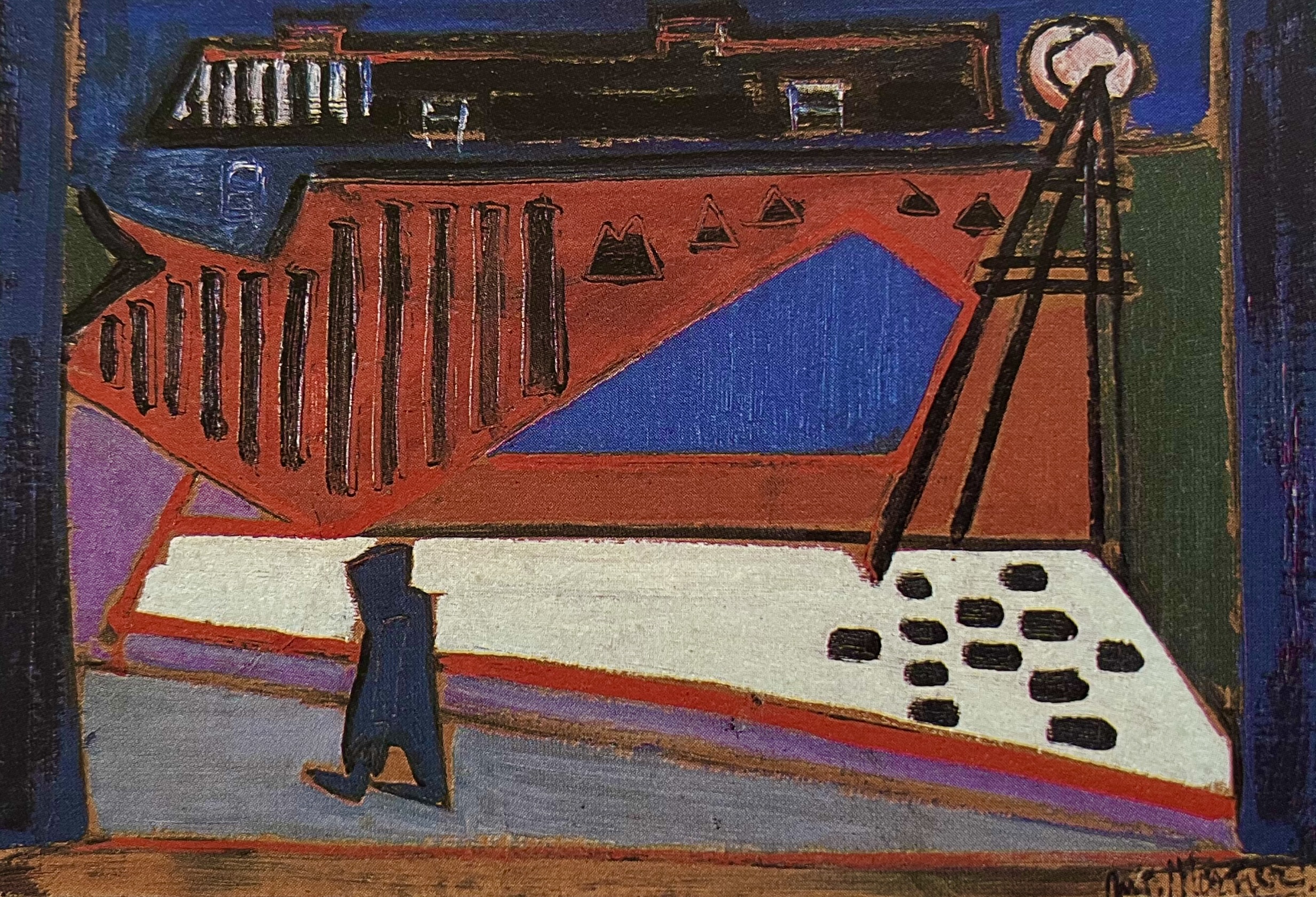
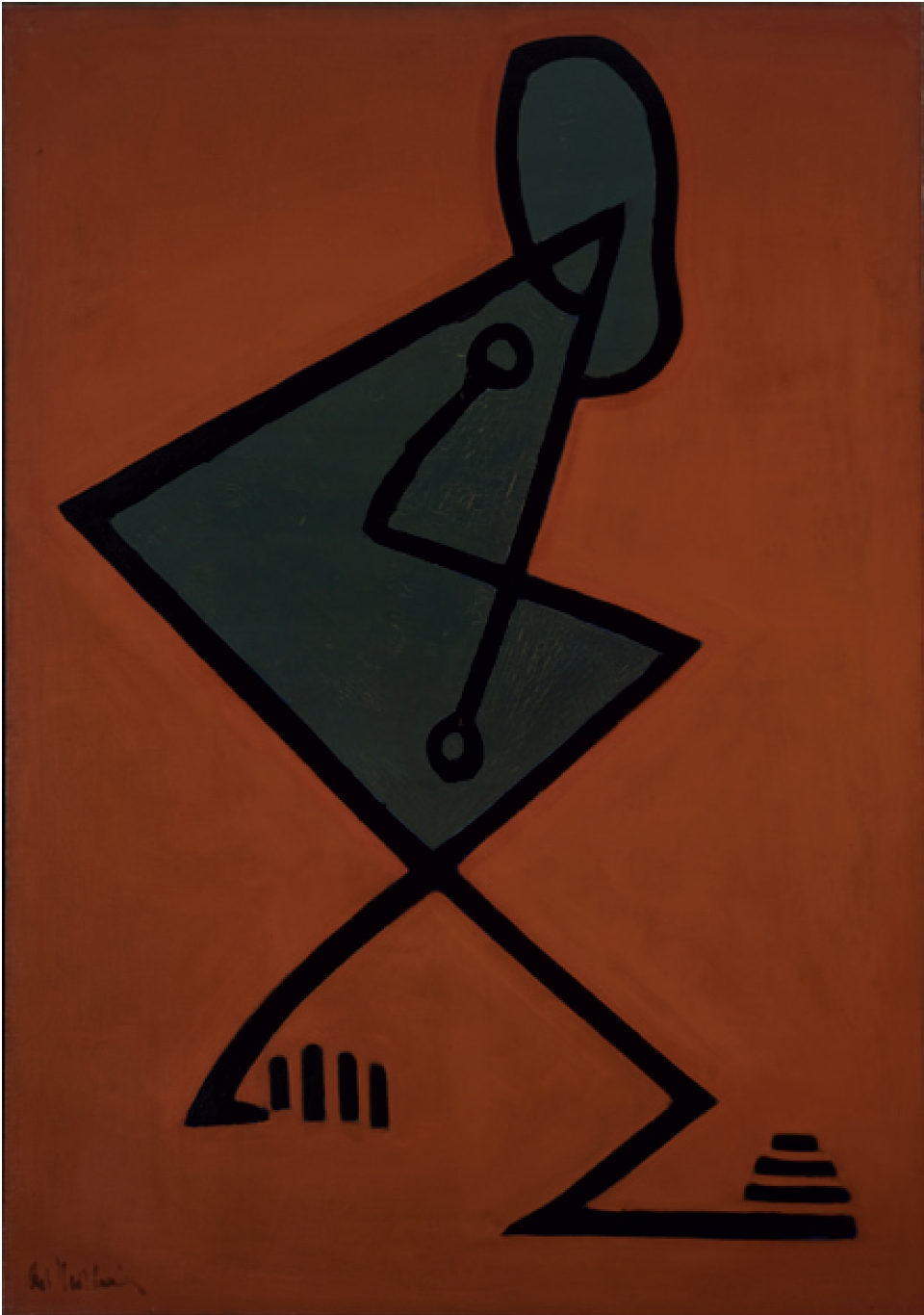
Trials and Statements (1950–1960)
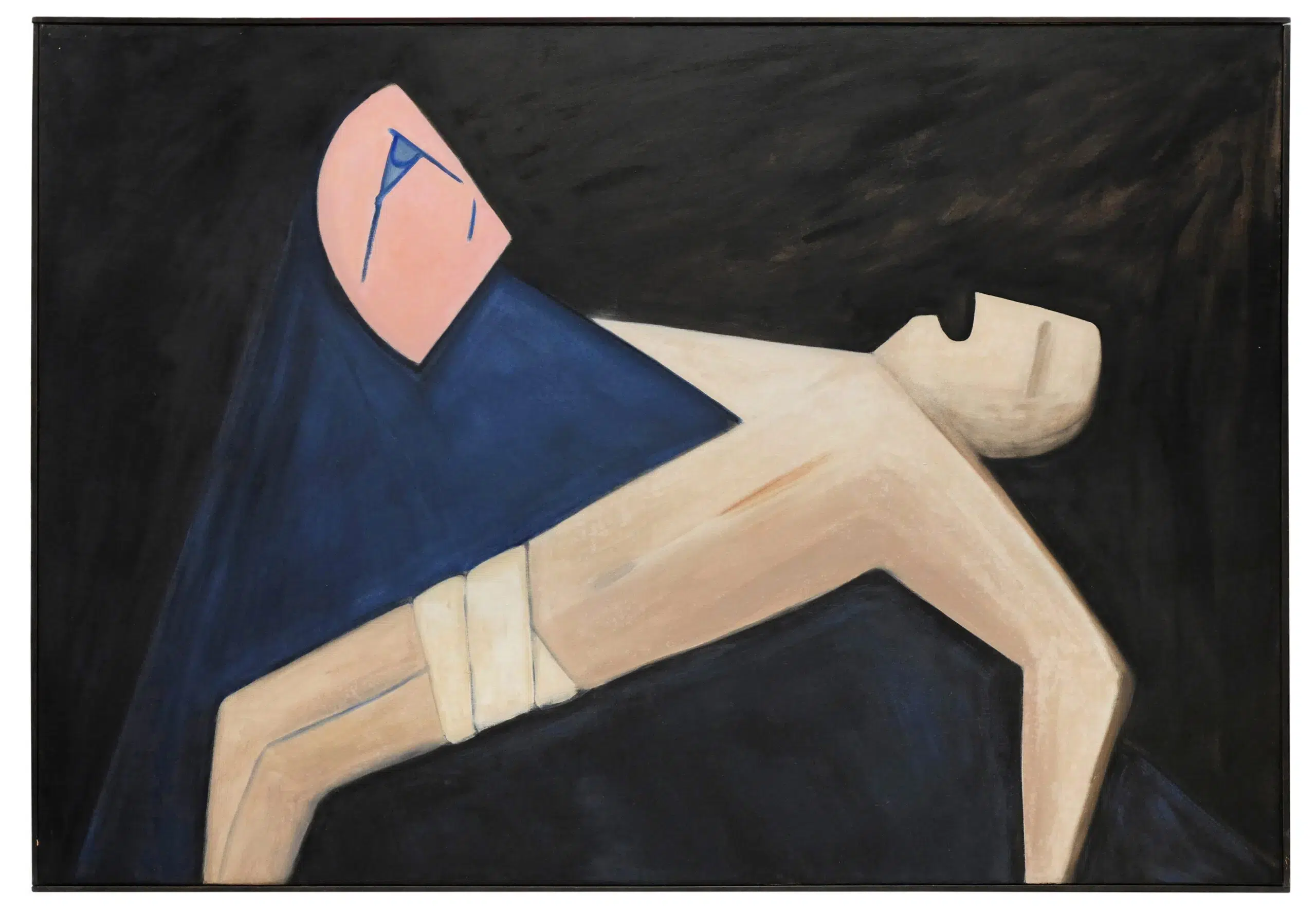
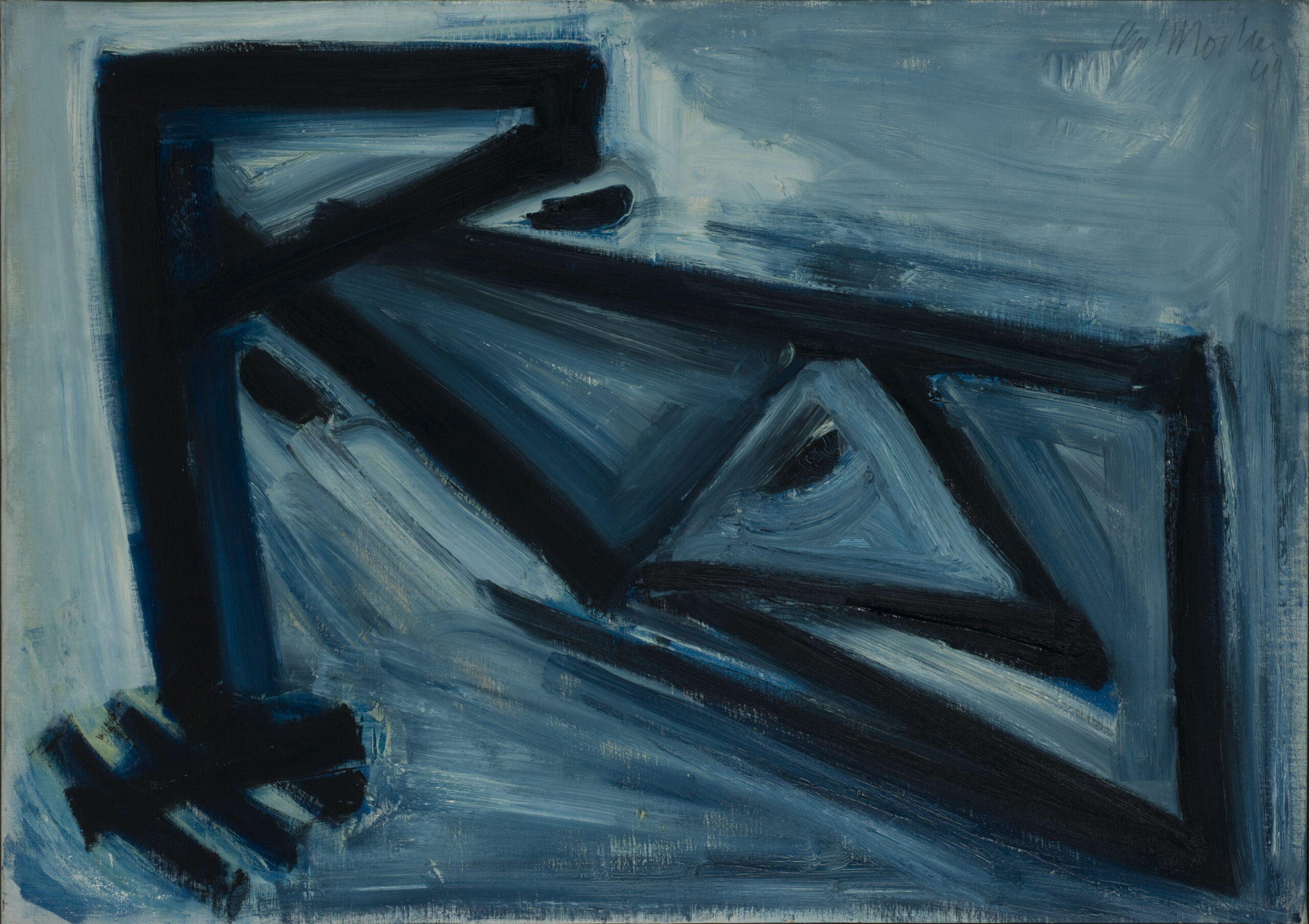
*BlueReclining Figure* (1949) fig. 12 is the painting that led to his association with Action Painting.
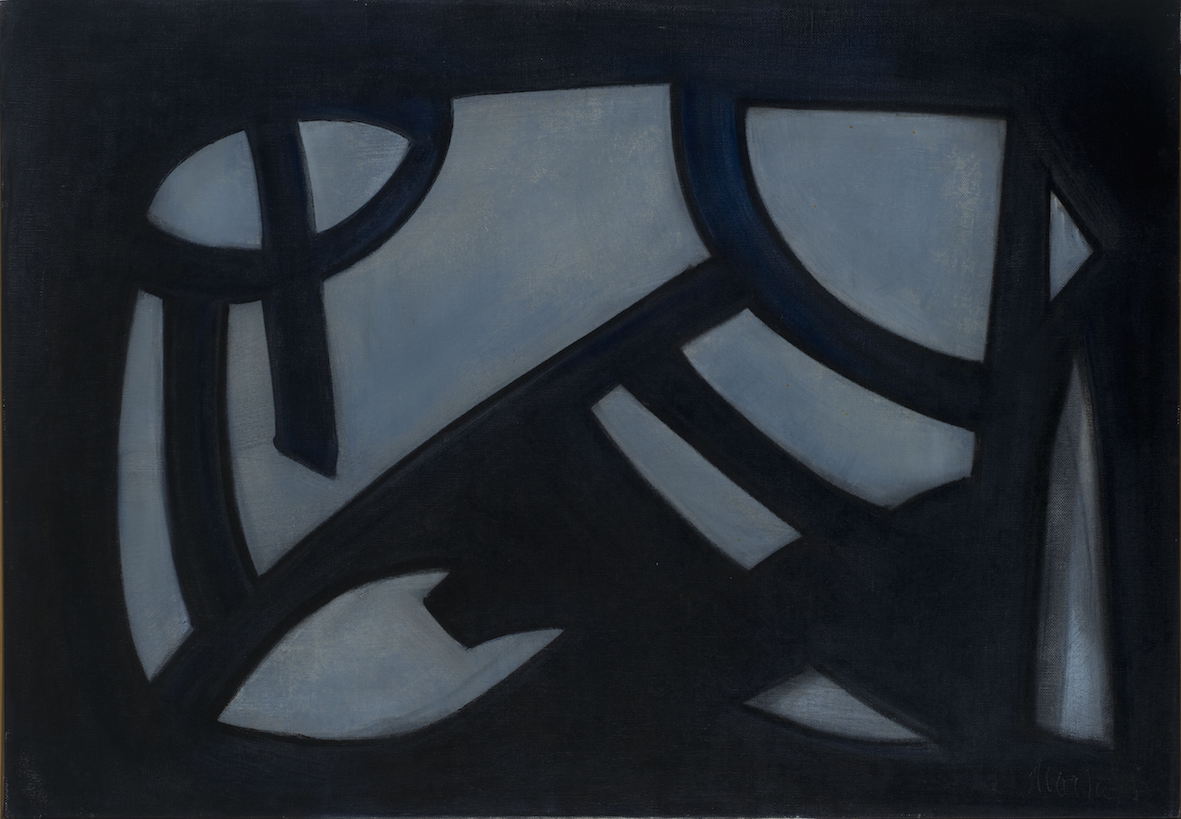
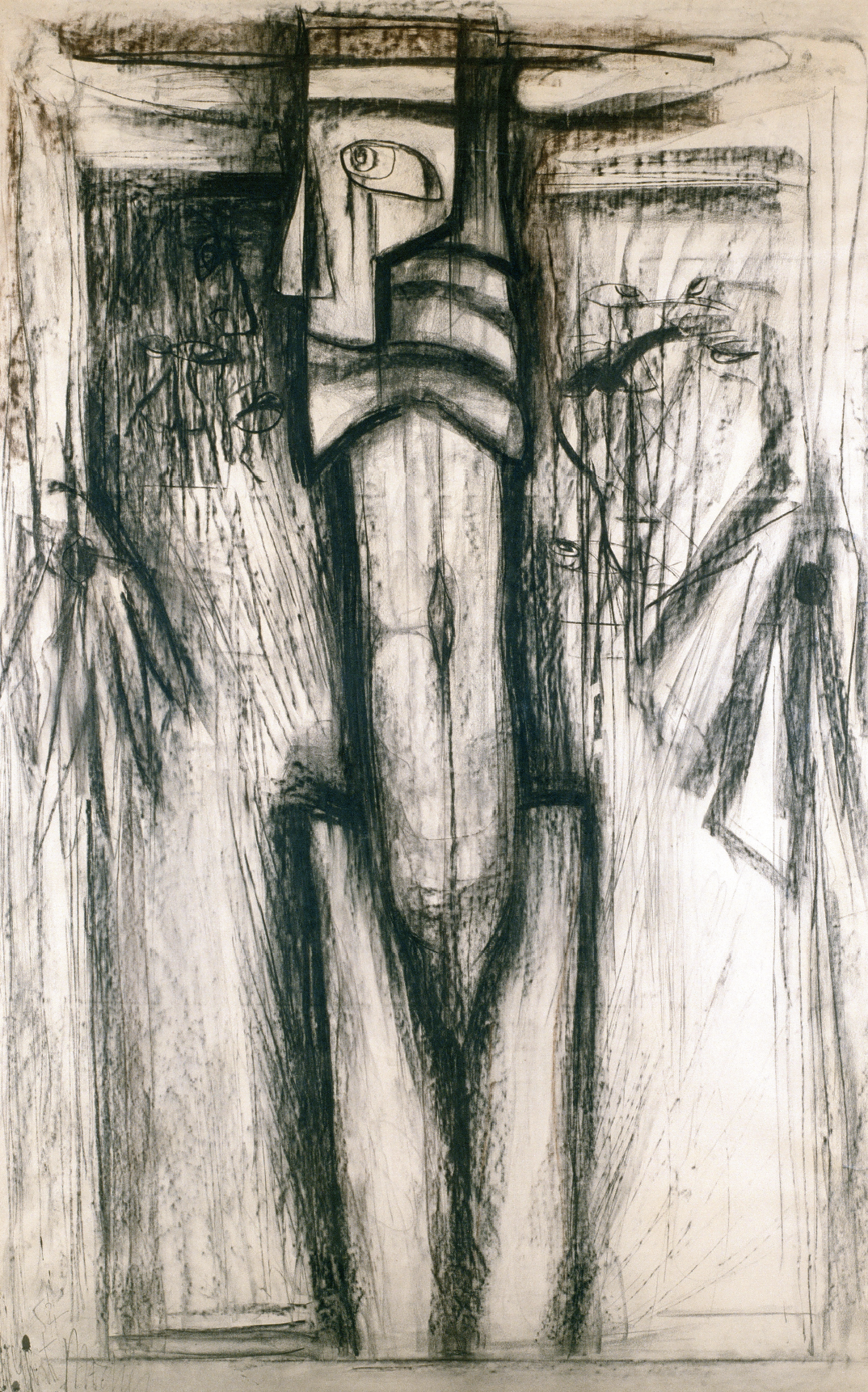
At that time, Action Painting and Abstract Expressionism were still unknown in Belgium and met with incomprehension from critics. This lack of understanding would further intensify his inner rebellion. Although he has been compared to Franz Kline or Pierre Soulages, he nevertheless stands apart from them because, for him, the brushstroke is not everything, but rather the embodiment of an initial subject that is analyzed, reinvented, and synthesized with rigorous precision. In Mortier’s work, the emotional rhythm intensifies into vehement maturity, and the brushstroke expresses itself with a subdued power. The artist unleashes his creativity in enormous wash paintings and finds his voice in oils on canvas.
Once again, financial constraints became pressing, and the artist found himself working as an apprentice furrier or on stage; this time, it was the Alhambra Theater that kept him occupied for two years (1950 and 1951). The repertoire of the opéra bouffe distracted him somewhat from his daily worries and later led to a lighter pictorial style.
The artist worked on large sheets of paper, which were less expensive than canvas and oil paint fig. 13 fig. 14. Robert Giron exhibited this pioneer’s wash drawings and canvases in 1952 and 1955, respectively. The Albright-Knox Art Gallery in Buffalo, New York, acquired *Variation 1951* [ fig. 15] during the Carnegie Prize (1952). The Guggenheim Museum in New York followed suit in 1953 by purchasing *Variation (Blue Torso) * from 1948 fig. 16, which had been loaned to the museum by Van Geluwe. Two foreign museums paid tribute to his artistic explorations. Mortier persisted and continued on his path, supported by his admirers and patrons.
As a recipient of a Belgian government scholarship, he traveled to France from September through November 1953. On November 10, in Paris, he met the prominent art dealer Daniel-Henry Kahnweiler, director of the Galerie Louise Leiris, who offered him a position if he moved to the French capital. Antoine Mortier was unable to accept the invitation for financial and family reasons.
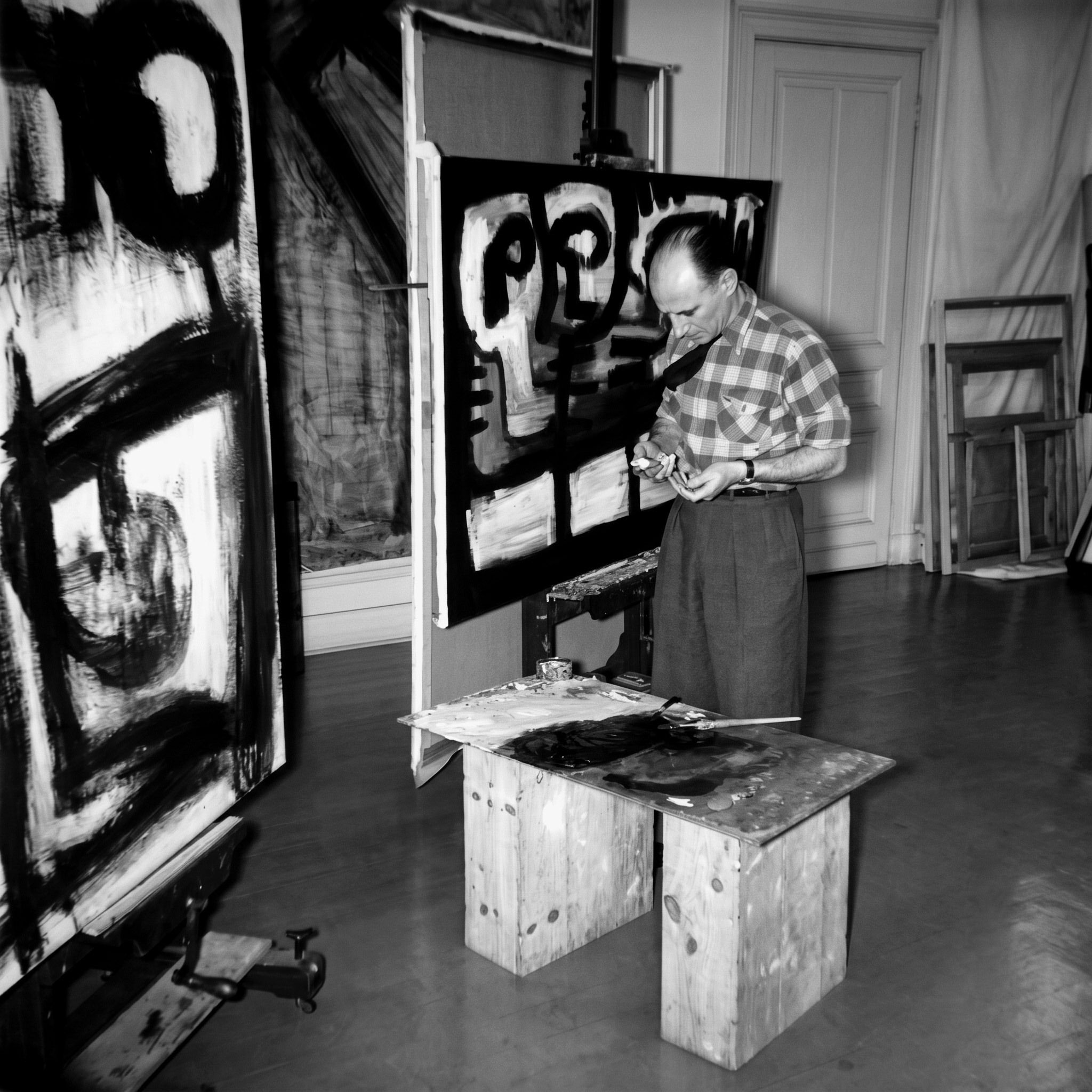
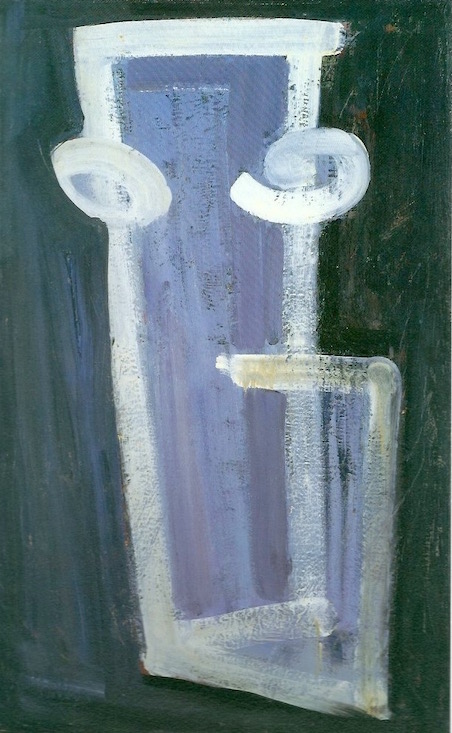
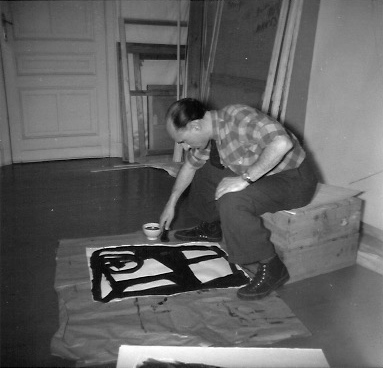
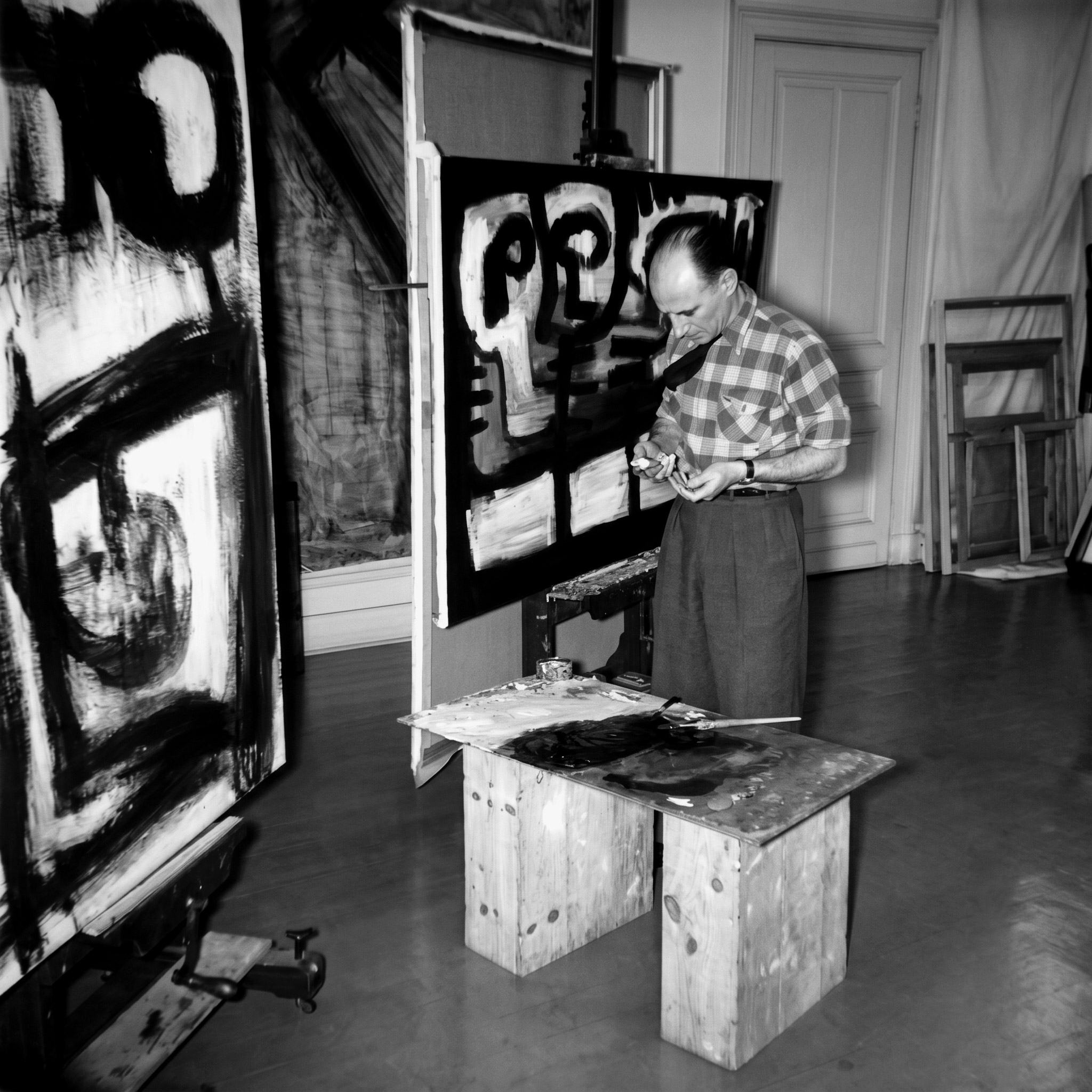
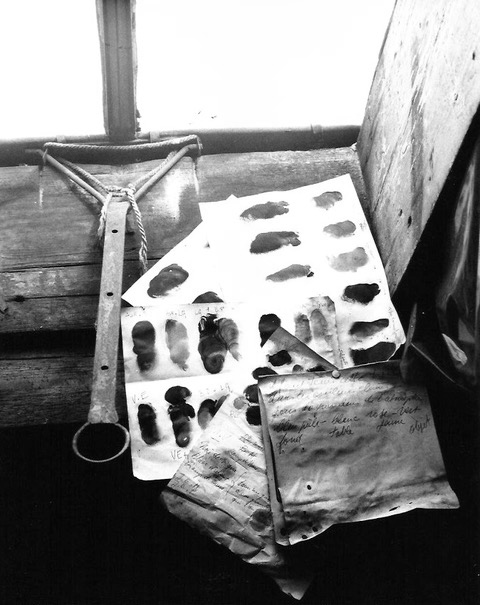
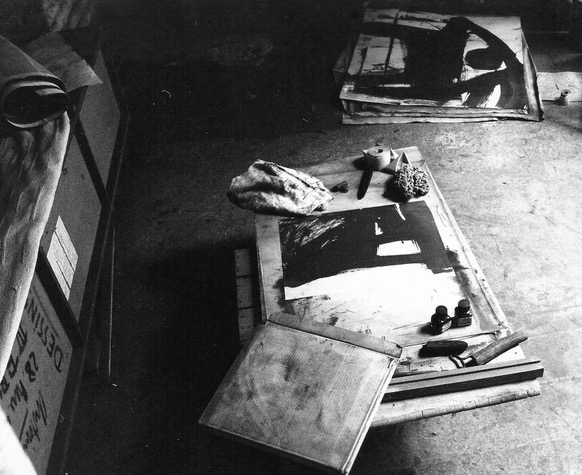
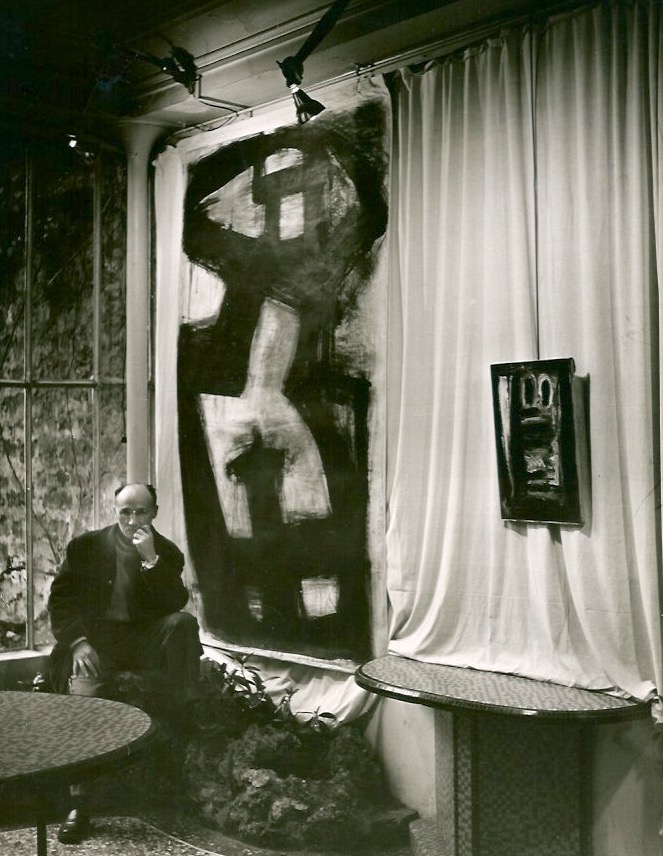
That same year, Baroness Lambert offered him a large space in her mansion on Avenue Marnix in Brussels. In the salons, Mortier discovered works by Renoir, Soutine, Rouault, Ensor, and many others. The baroness showed her guests around the studio. It was a prosperous period, and Mortier painted his works there without constraint fig. 17 fig. 18 fig. 19 fig. 20.
To confirm his artistic direction, reevaluate his options, or assess his technical skills, the artist applied for a scholarship that took him to Spain. At the Prado Museum, he studied the works of the Old Masters, such as Van Eyck, Memling, Uccello, Bosch, Goya, and El Greco.
In 1956, Paul Fierens informed Mortier of his intention to write a monograph dedicated to him. To write it, the two men formed a close relationship, and their dialogue proved to be profound. Fierens was granted special access to the attic where the artist had taken refuge and, climbing the narrow ladder, entered the artist’s sanctuary.
He blends in so well with Mortier that he perfectly embodies the artist’s vision. Their communication is seamless. What one paints, the other writes.
“Mortier is not an anarchist. At least, he is not in the sense that his temperament rejects certain conventions—or routines—of the art of the past and, above all, of the art of today. He respects his predecessors, the Expressionists, and acknowledges his debt to them. But for several years now, he has been true to himself, with a passion, a fervor, and an impetuosity that, when channeled, ensure the power and intensity of his work, into which his entire being projects what is most essential, most unyielding, and most instinctive within him. ” *
*—Paul Fierens, Antoine Mortier, 1956.
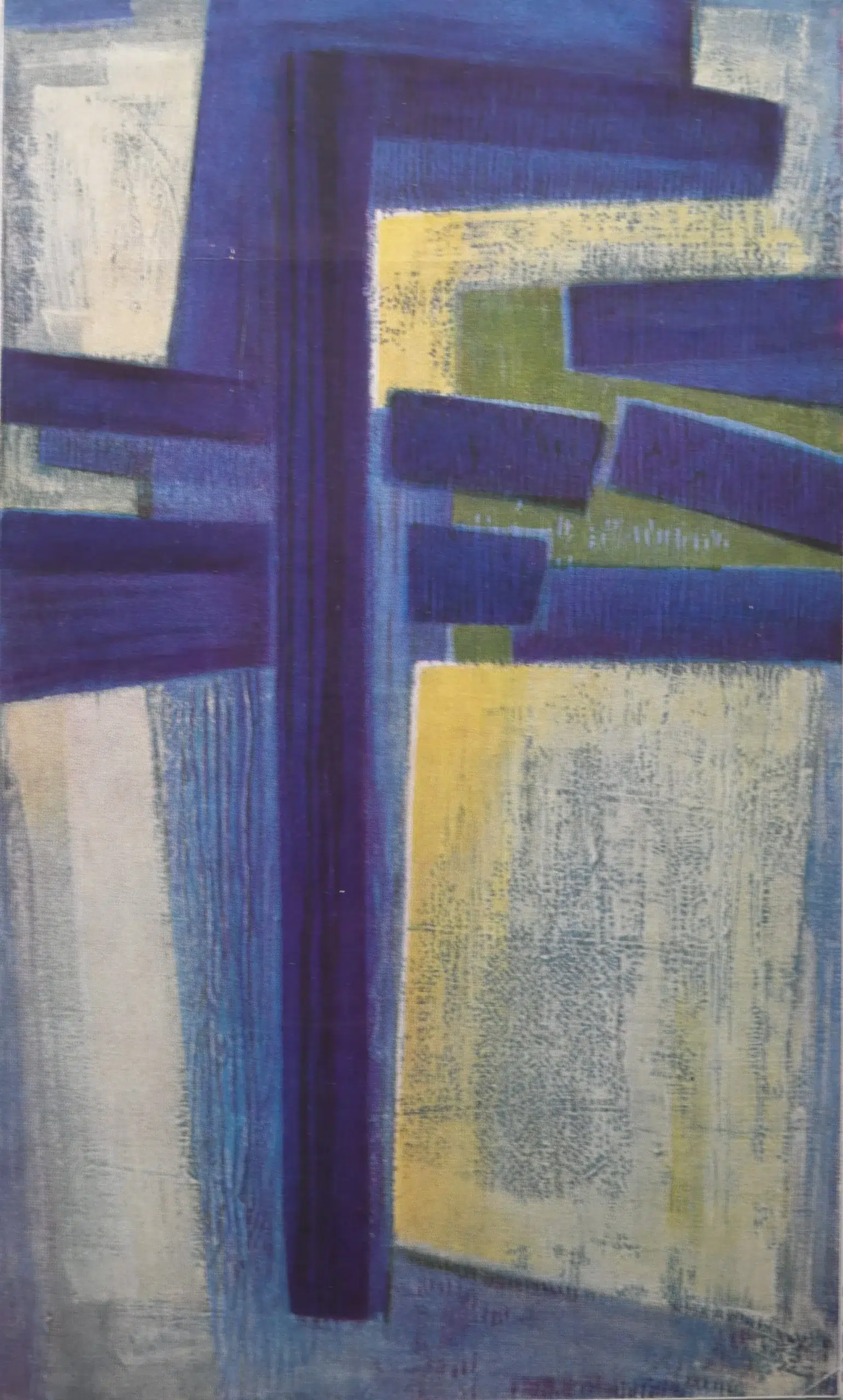
*Rigueur bleue* (1954) fig. 21 is the cover of the monograph on Antoine Mortier written by Paul Fierens and published in 1956.
In late 1956, a fire at Baroness Lambert’s mansion put an end to the peaceful haven that had inspired several of the artist’s masterpieces. Called to Avenue Marnix one freezing winter night, Mortier helped evacuate the many masterpieces and his studio.
This was another particularly bleak period. In 1957, he was working as a laborer for the framer Gabriel Van Thienen on Rue de l’Enclume in Saint-Josse-ten-Noode. Plagued by financial hardship and no longer having a studio of his own, the works he was developing could not see the light of day.
The Taptoe Gallery in Brussels invited him to present a solo exhibition in March 1957, alongside the one at the Le Verseau Gallery. His independence, his freedom, and his uncompromising standards set him apart and definitively isolated him from the movements of the École de Paris, which were highly prized by collectors in the southeastern part of the country.
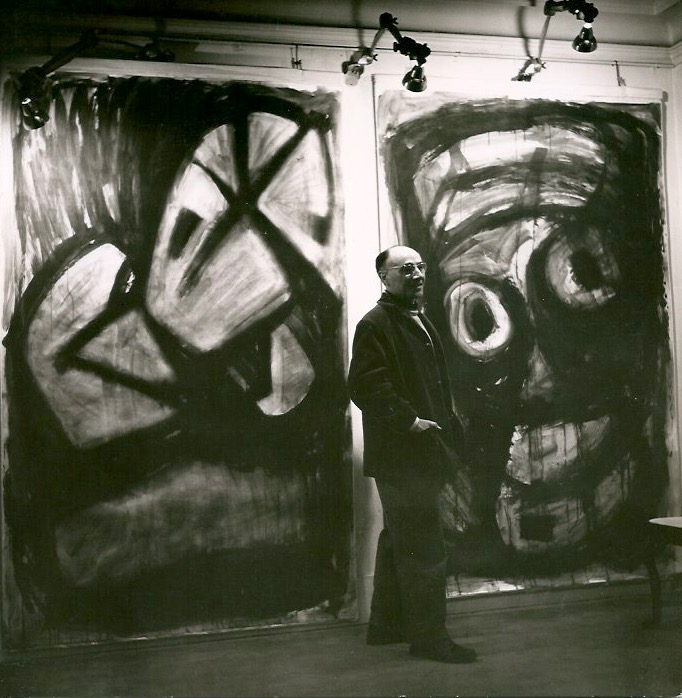
Since he had no recent works, he was excluded from official exhibitions and from the Belgian pavilion at the 1958 World’s Fair, while he was invited by the daring Galerie Colette Allendy in Paris to present his large-scale ink wash paintings to French critics fig. 22 fig. 23 fig. 24!
Seeing how disappointed the artist was, Van Thienen encouraged him to take up painting again.
The reports from his three fellowships in France (1953), Spain (1956), and Italy (1959), along with the notes in his travel journals and his artistic observations, shed light on the religious themes that run throughout his work: the Pietàs, the Variations on Christ, the Entombments,… [ fig. 25] fig. 26 fig. 27 fig. 28 fig. 29. The technical instruction and layout of the Anciens serve as lessons in art history that remain a model of artistic communication. [Cf. Analysis: “Sacré Mortier“.]
In 1959, Mortier met the banker Maurice Naessens, who purchased about twenty of his paintings for Banque Paribas.
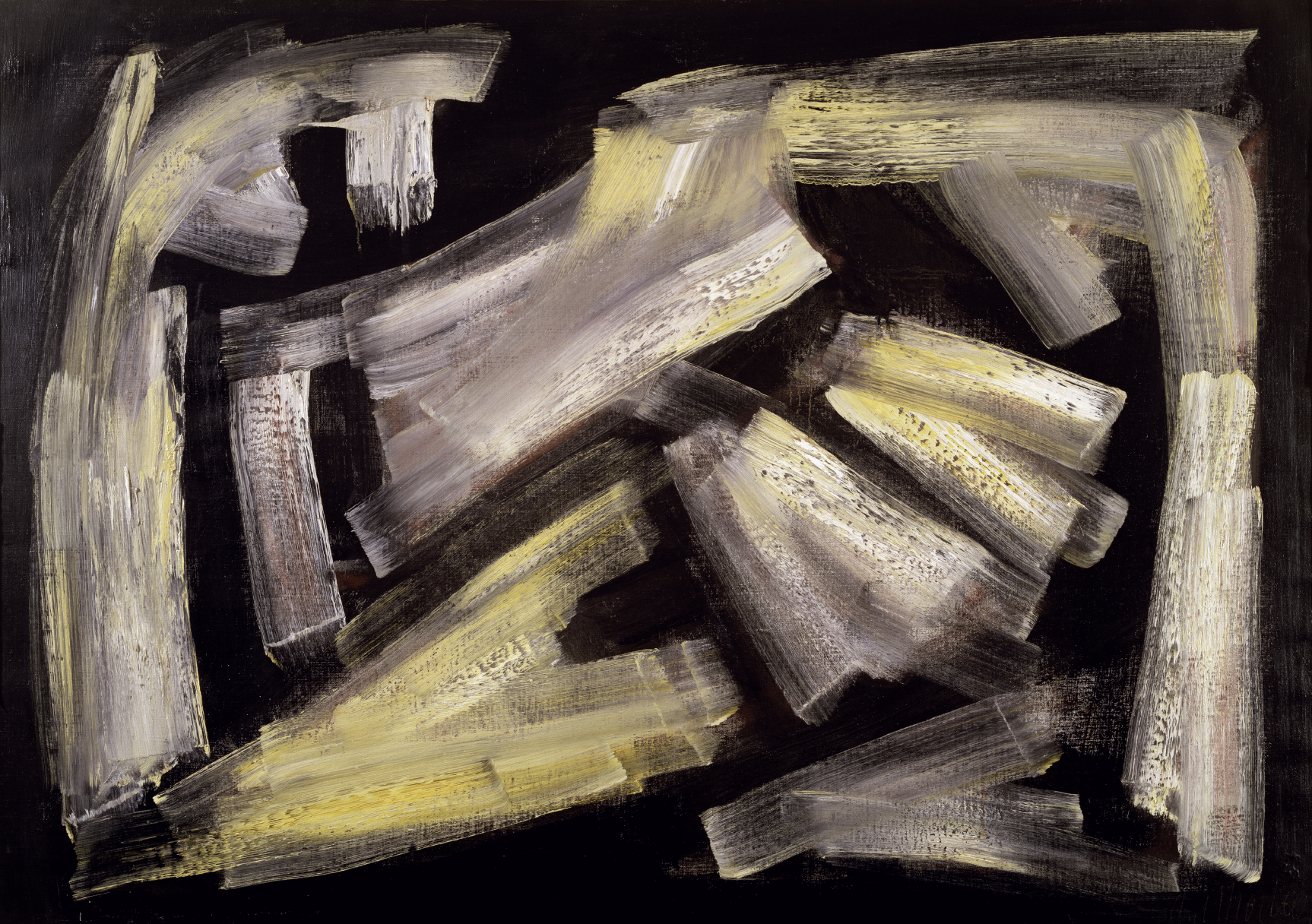
A Prolific and Timeless Body of Work (1960–1980)
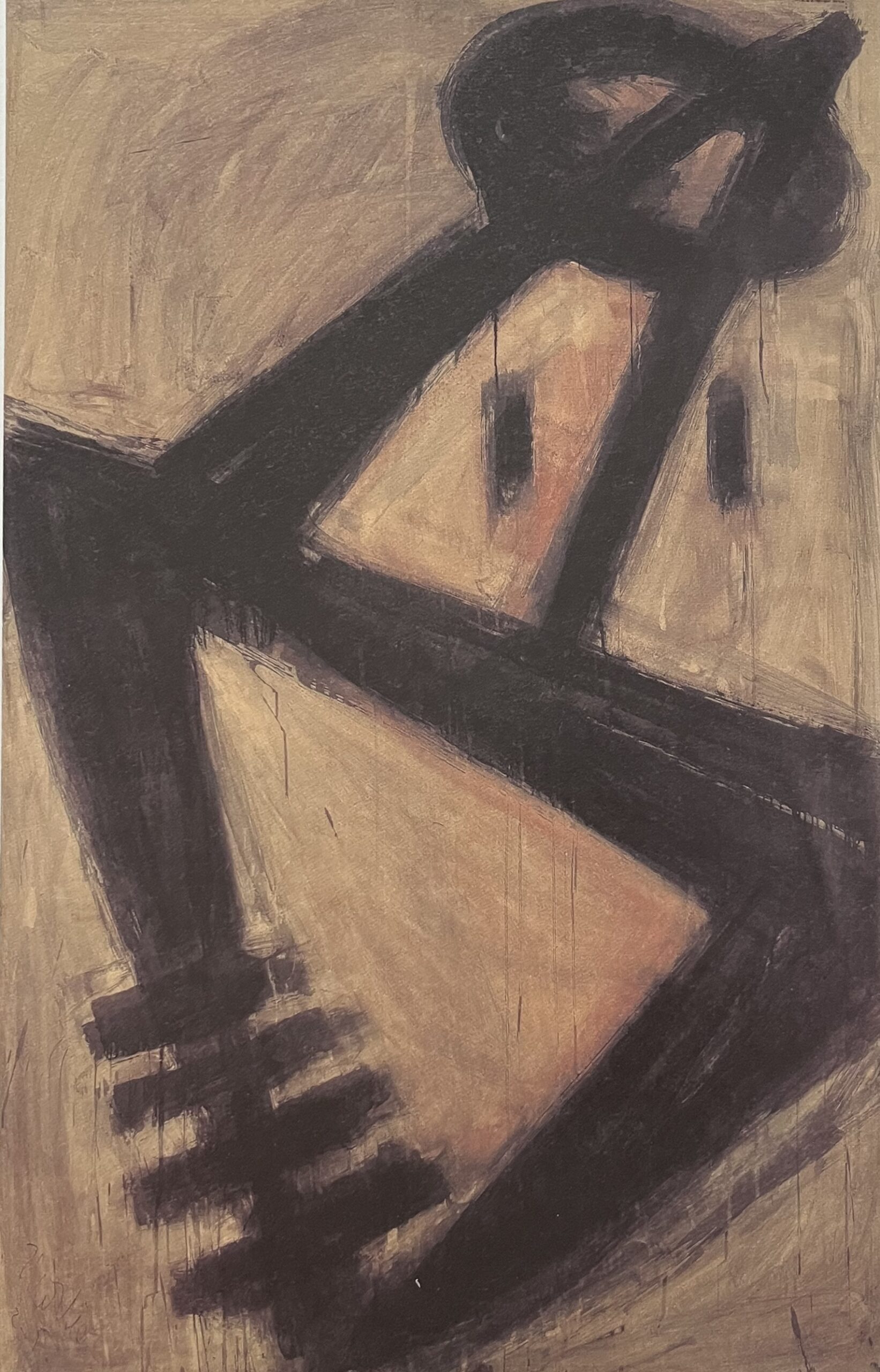
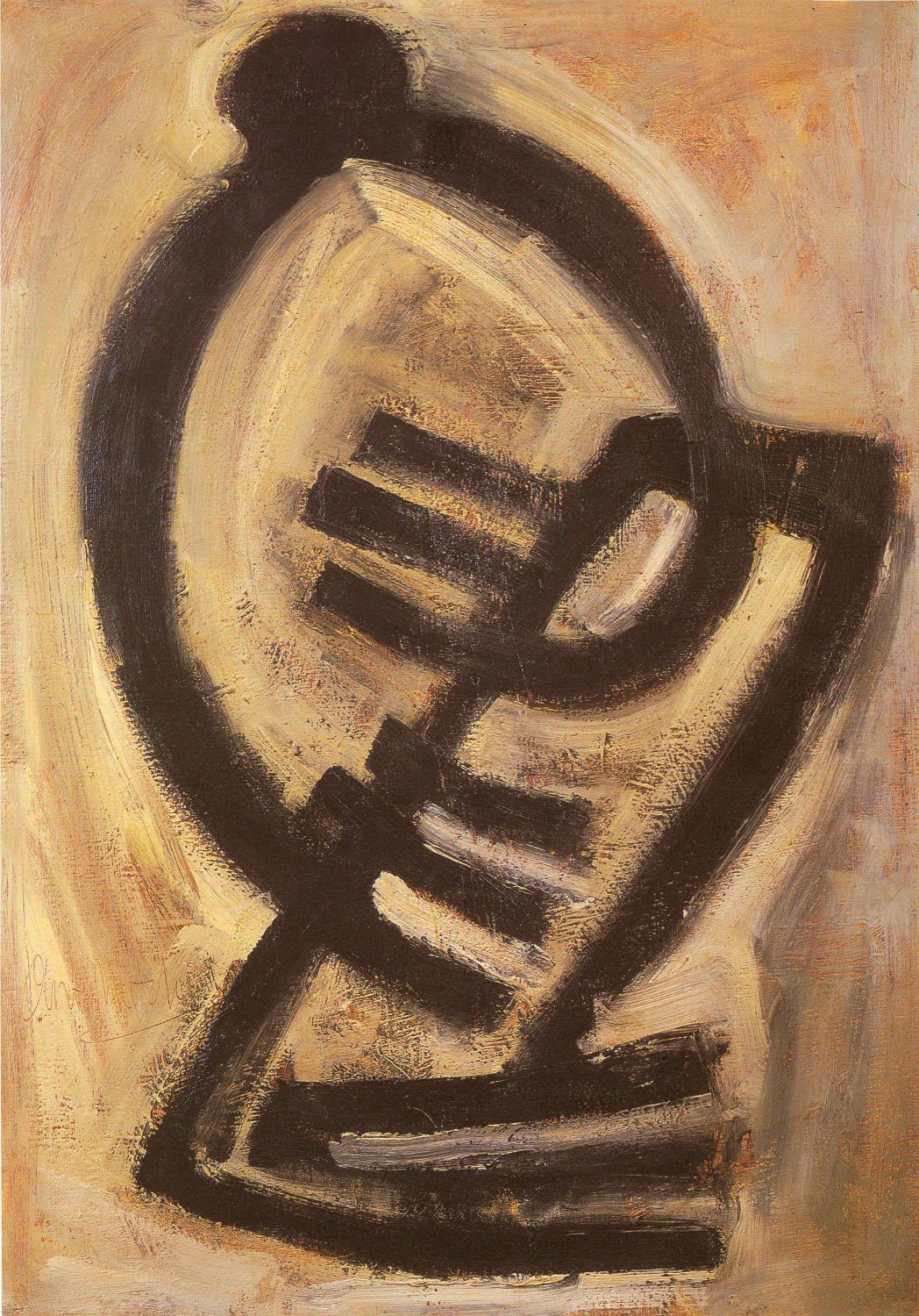
The painter rented a studio on Rue du Marteau, and better days lay ahead, marked by numerous participations in international exhibitions: the Venice Biennale in 1960, and exhibitions in Tokyo and São Paulo in 196. For the latter, a detail from his work *Grand(s) fond(s) * fig. 30 appeared on the cover of the Belgian section’s catalog.
It is liberation—the fierce will to survive and to live—that bursts forth in the paintings of the 1960s. Mortier bought his first car, a Fiat 600, and learned to drive it so he could take his family to their artist-in-residence stay on Isola Comacina on Lake Como in Italy. [See: Insights: Antoine Mortier in residence on Isola Comacina]. In 1967, he drew up the plans and oversaw the construction of a house-studio in Walloon Brabant.
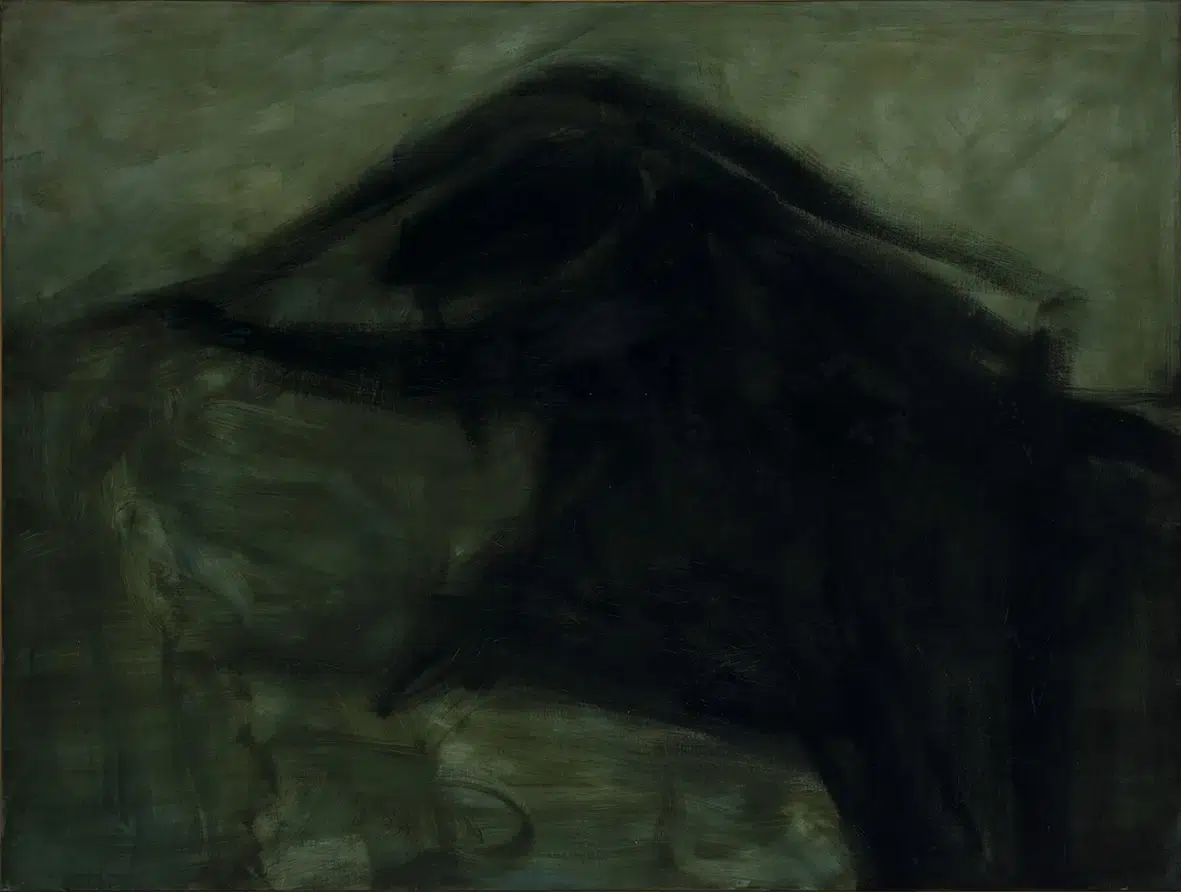
So much pent-up passion, emotional tension, bitterness, and self-doubt would lead to the creation of works such as *The Scream*, *Anxiety*, *Chord*, *The Peaks*, and *The Message* [ fig. 31]fig. 32fig. 33.
His works were exhibited abroad: The Hague and Stuttgart (1963), Rio de Janeiro (1965), Madrid (1966), Montreal (1967), and Tehran (1968–1969).
The Palais des Beaux-Arts in Brussels is dedicating its first retrospective to him. This exhibition offers a first assessment of his work, as well as an opportunity to reexamine and refine it. Mortier is a man of self-criticism, passion, intensity, rigor, high standards, and perseverance; in both his life and his work, nothing is left to chance!
This work is not always easy for the casual listener to approach; it reveals itself gradually, shocks at first, and ultimately wins you over by demonstrating its freedom, its independence, and the connections that have allowed it to exist with such power and sincerity.
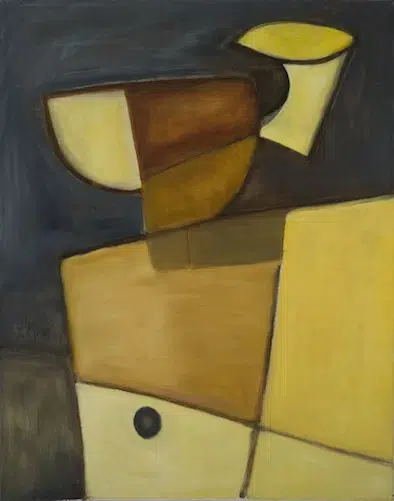
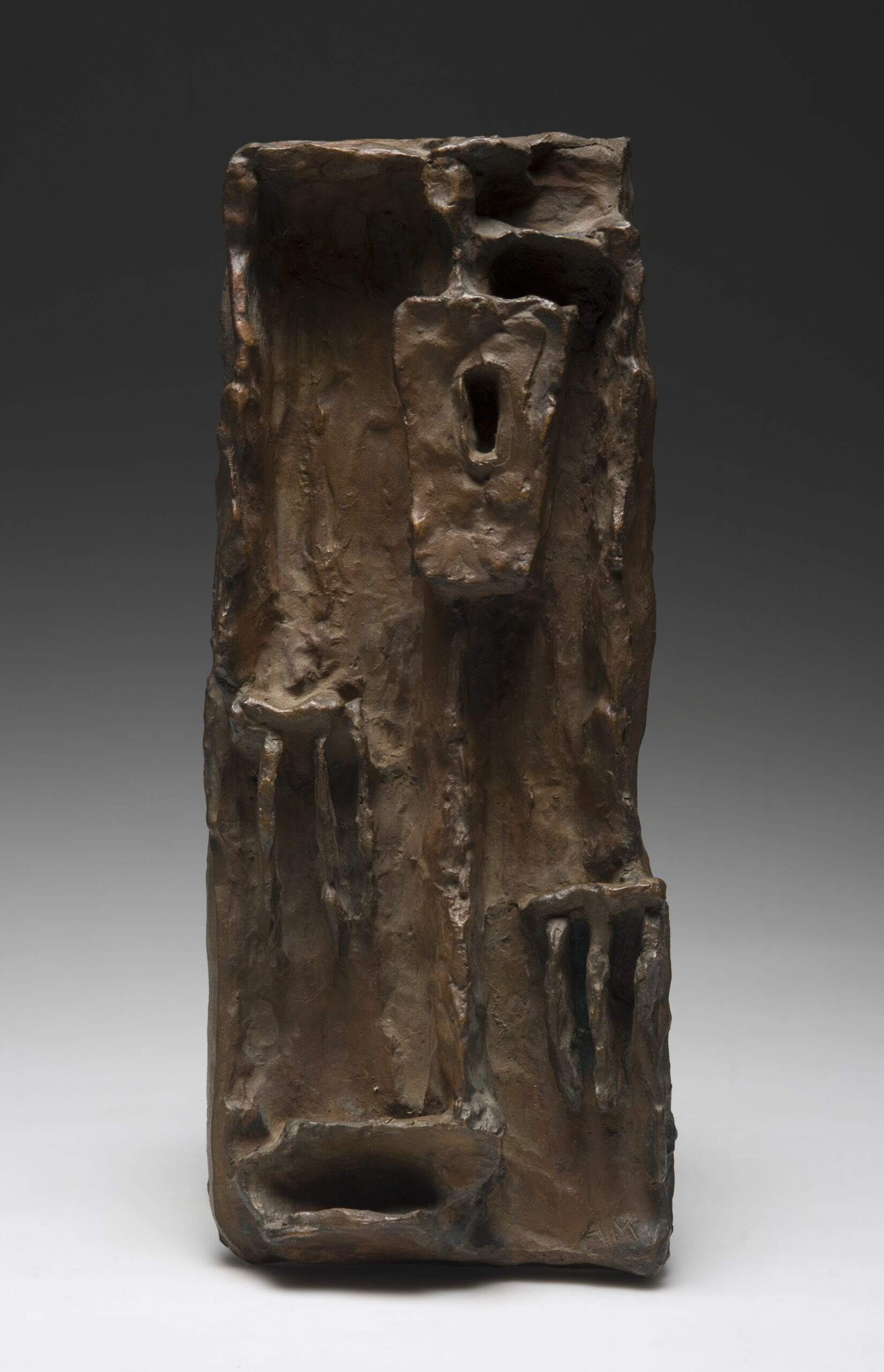
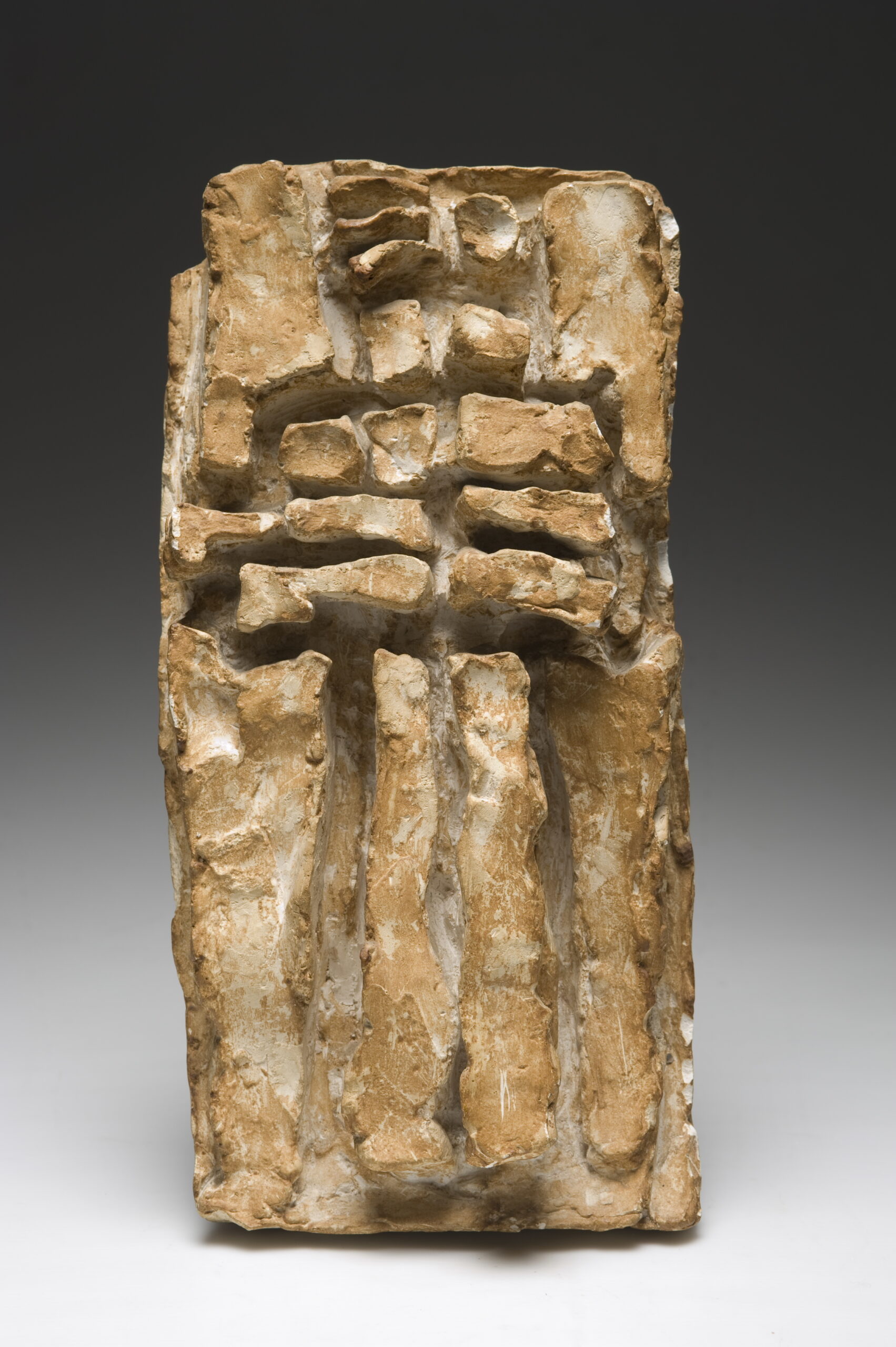
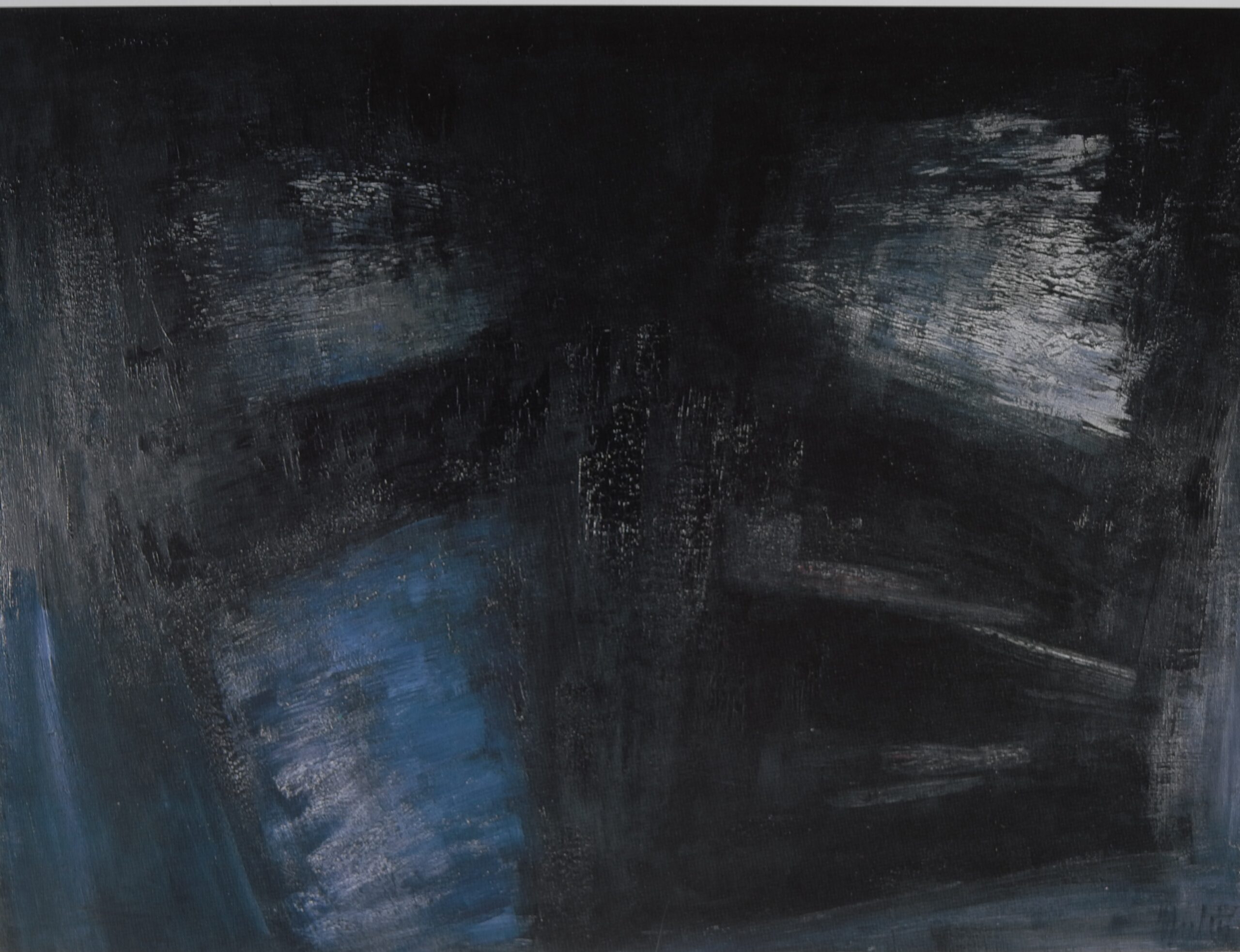
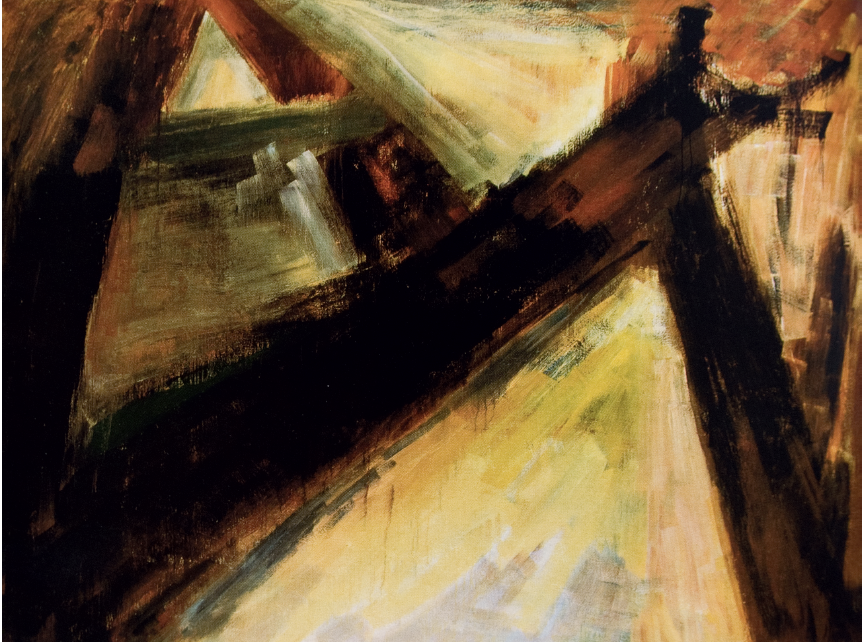
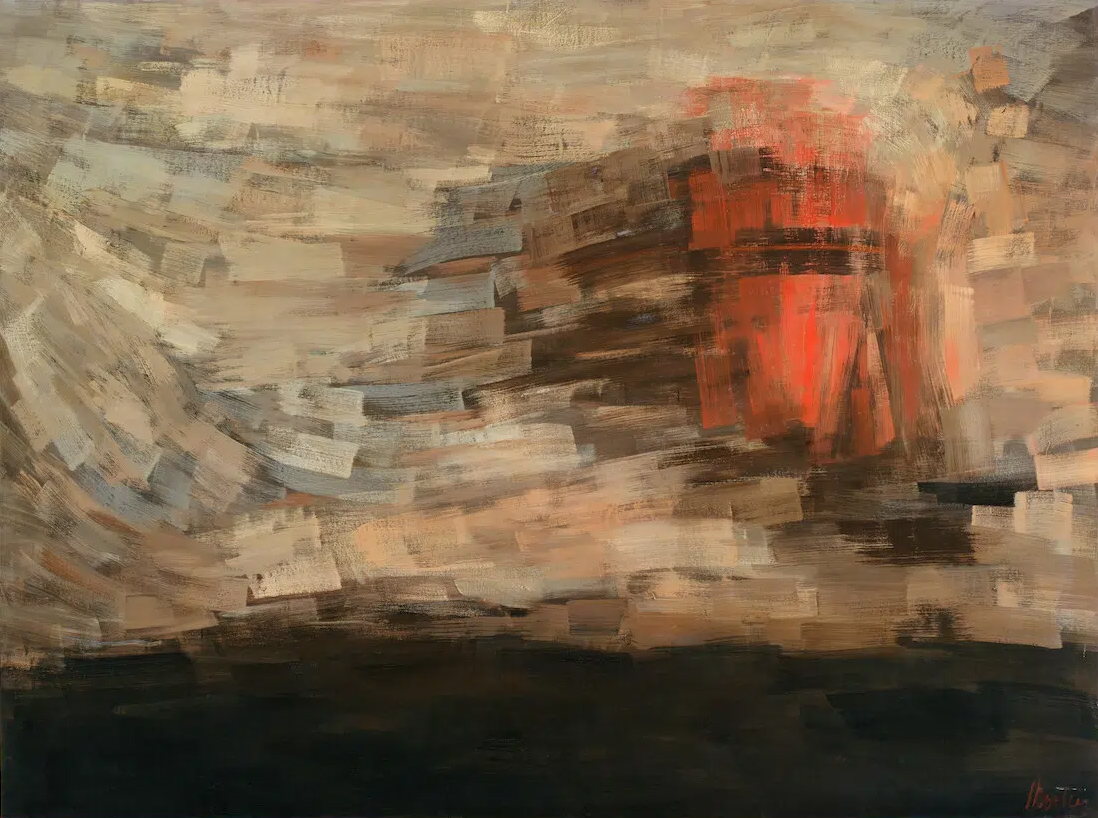
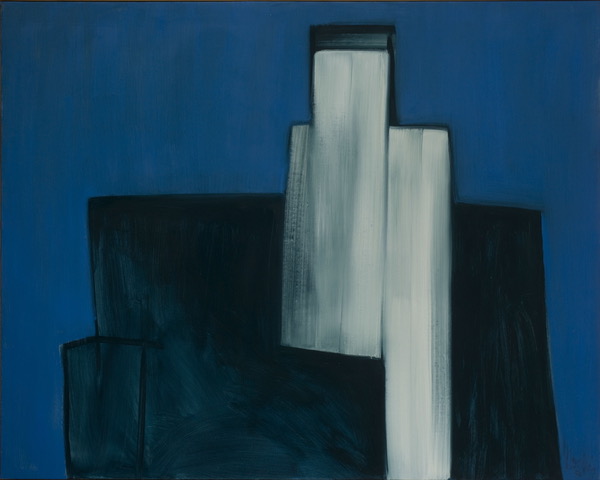
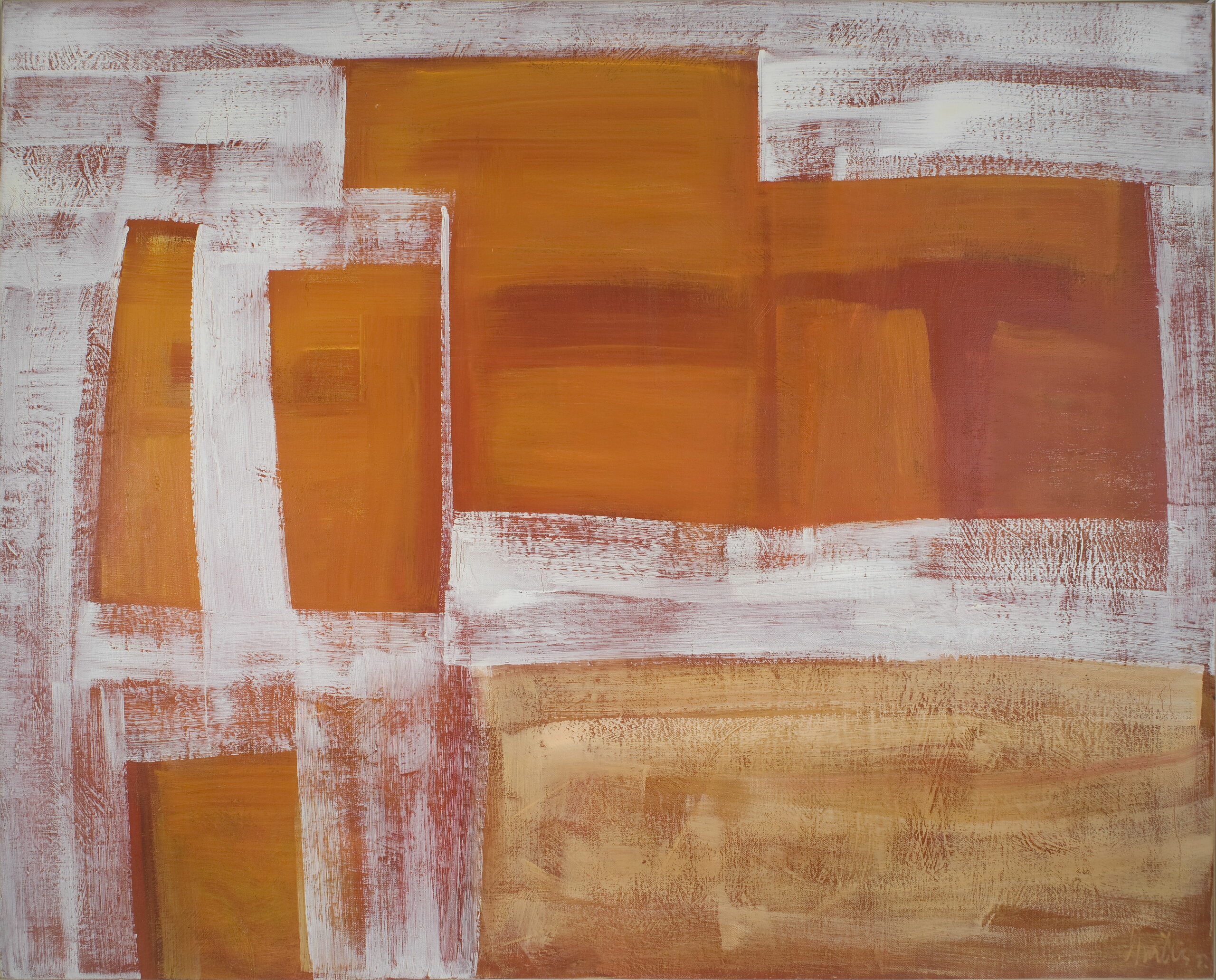
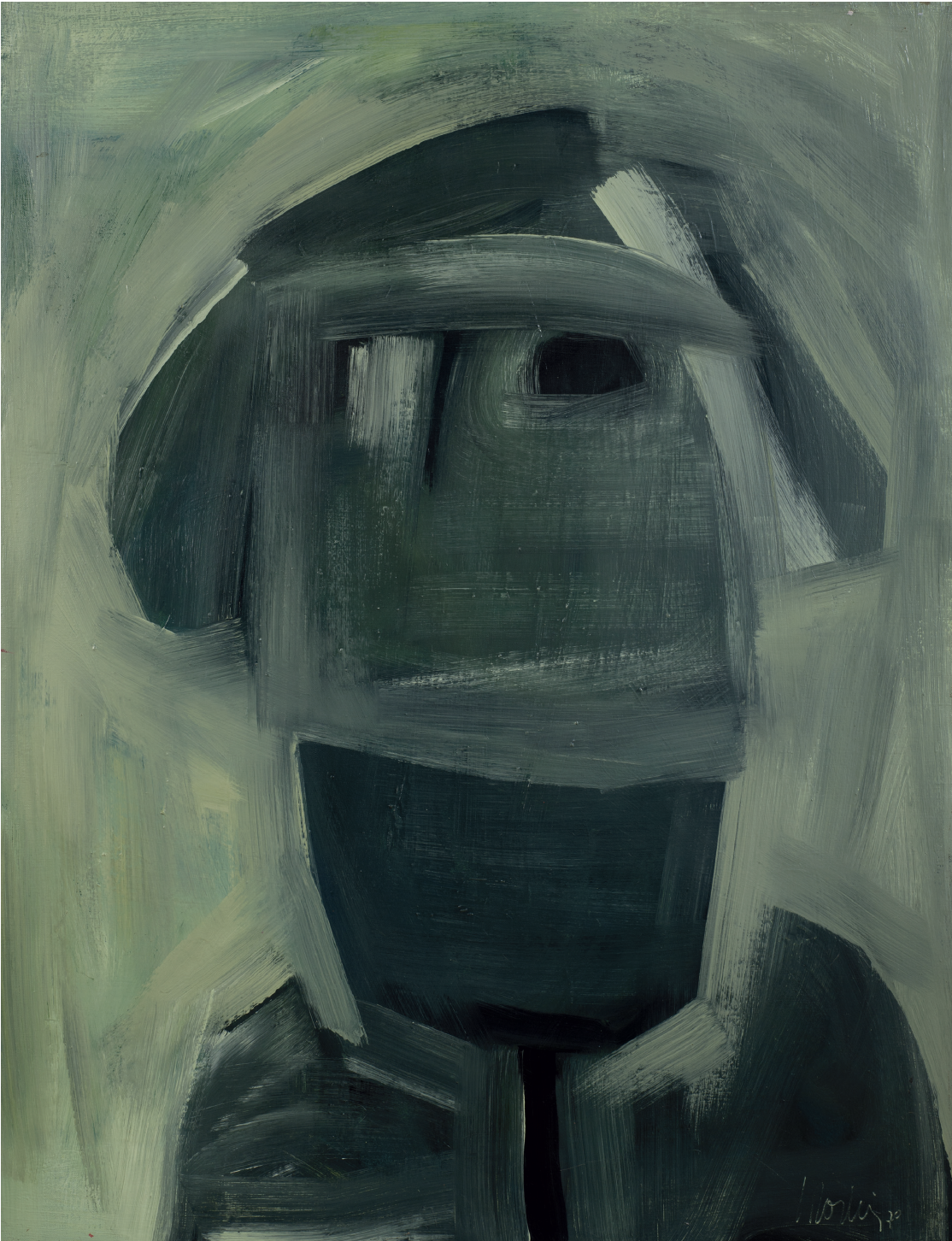
In early 1970, Mortier moved into his new 65-square-meter studio, lit by two large north-facing windows. He had to adapt to it, make it his own, and master it [See “Insight: Antoine Mortier’s Studios”]. The numerous “series”—ink drawings—were created using a palette and oil, then organized, stored, and hidden away in portfolios fig. 34 fig. 35 fig. 36. A few unusual portraits are added to the collection, such asArthur, Léontine, Kwiebus, and Laura [ fig. 37] fig. 38.
Unconditional Freedoms (1980–1995)
The paintings from the 1980s are reduced to the simplest expression of the line and focus on the richness of colors, the secrets of which the artist possesses.
At the age of seventy-six, captivated by a block of raw concrete, he accepted the commission to design the “Yser” metro station in Brussels. Mortier paid tribute to the valiant soldiers of the 1914–1918 war, whom he had held in high regard since childhood. The station was inaugurated on his eightieth birthday.
In 1986, Antoine Mortier was the subject of a dual retrospective; the paintings fig. 39 fig. 40 fig. 41 and documents were exhibited throughout the Altenloh building of the Royal Museums of Fine Arts of Belgium on Place Royale, while the works on paper filled the walls of the galleries at the Palais des Beaux-Arts in Brussels. It was a return to his roots!
Under the direction of Karel Geirlandt, director of exhibitions at the Palais des Beaux-Arts, a second monograph has been published by Editions Lannoo. The lead author analyzes and compares the historical significance of the artist’s work with that of his contemporaries. The record is now set straight!
In May 1989, Karel Geirlandt, his loyal friend of more than fifty years, passed away. Jan Hoet, director of the Stedelijk Museum voor Actuele Kunst (SMAK) in Ghent, organized an exhibition of Mortier’s works as a tribute to his loyal supporter and friend.
On October 26, 1992, his unwavering support, Emilienne, passed away. Antoine was overcome with grief. He abandoned his studio and spent more and more time in his small apartment in Boitsfort, where he carried on surrounded by his family and friends.
In late December, the artist was involved in a car accident while serving as a best man at a wedding. In early 1993, an X-ray revealed a double fracture of the spine. A lengthy surgical procedure saved his mobility, but the surgery left him with signs of confusion.
Antoine Mortier expresses this through his painting in a series of resilient canvases characterized by a simplified and economical style.
The Dhondt-Dhaenens Museum hosted his final solo exhibition in 1994 fig. 42 fig. 43 fig. 44 fig. 45 fig. 46.
“And it happens that a man, exhausted of intellect and reason, finds himself at ground zero, alone with his deepest instincts. It is that ineffable moment when the soul quivers, vibrating in ardent communion with the elemental forces. ”
— Antoine Mortier, *Etat d’âmes*, Ed. Tandem, Alentours Collection, 1985.
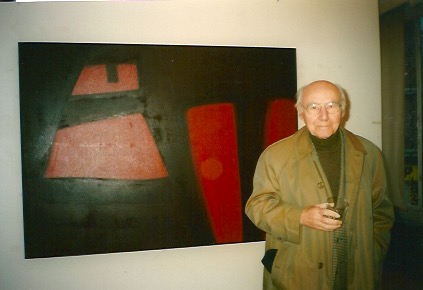
In 1996, the Galerie Cyan in Liège dedicated a solo exhibition to him—the first in a retrospective series that introduced him to the Liège public, who were firmly focused on Paris. This event was one of the Belgian painter, draftsman, and sculptor’s last public appearances fig. 47.
Nothing can stop the artist, who remains true to himself—neither age nor wisdom.
Antoine Mortier secured his place in the history of Belgian art. He passed away in Brussels on January 26, 1999, at the age of 91.