Exhibition – A Private Collector’s Cabinet: The Measure of the Object, Antoine Mortier and Jean-Pierre Ransonnet.
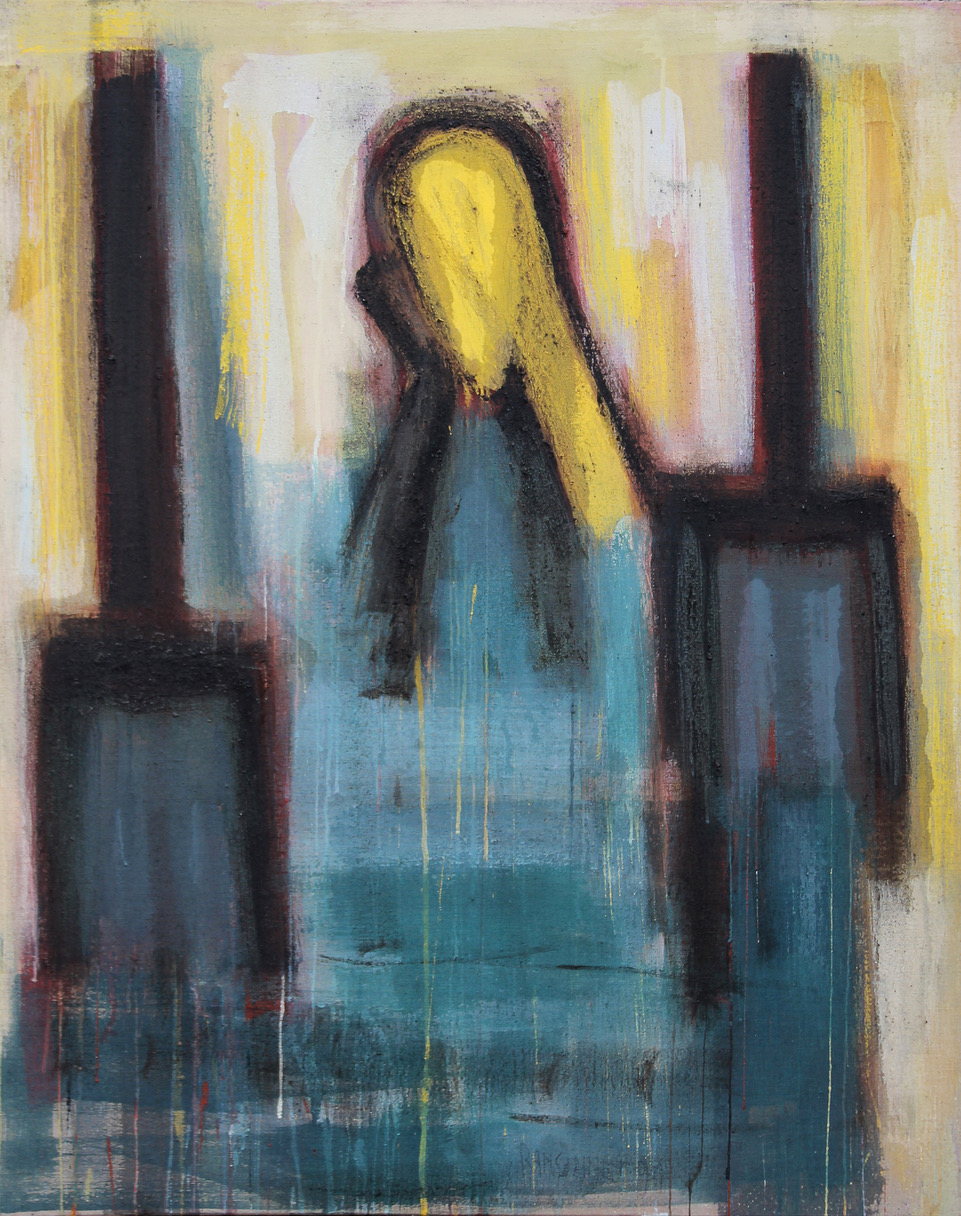
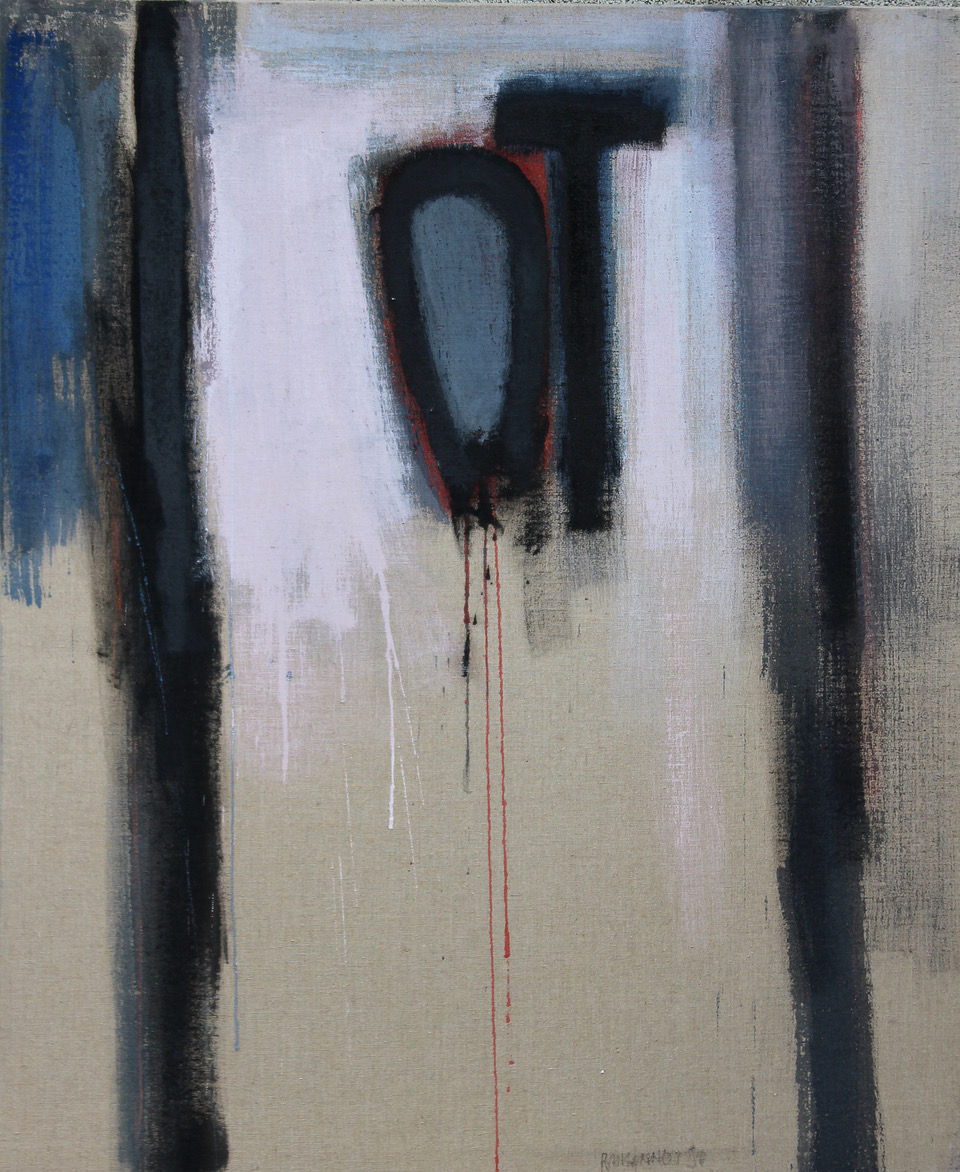
A native of the Ardennes, Jean Pierre Ransonnet (Lierneux, 1944) fig. 1 lives on the edge of the forests in the hills above Liège and finds in the recurring theme of the fir tree and a landscape in tension—at once pristine and shaped by human hands—the foundation of a rich pictorial language. During the 1980s, the period under discussion here, it was man and his labor that captured his attention. Painter, laborer, artisan, blacksmith… man is clearly defined by what he does. Through the indirect paths of stylized figures and tools (the T-shaped square, the painter’s brush…), the artist contributes in his own way to the revival of painting and Neo-Expressionism that was taking place throughout Europe. This allows us to draw a parallel between him and his host, Antoine Mortier (Brussels 1908–1999) fig. 2, whose monumental and expressive style—regardless of the degree of transfiguration—has been associated with abstract expressionism.
A work that explores human depth and social and cultural identity, Ransonnet’s painting also focuses (as postmodernity dictates) on the act of painting itself—the why and the how. A broad vision juxtaposes the tree with the forest, the tool with the figure, and the intimate with the collective—with, implicitly, the memory of those who came before. Since the 1970s, places, people, and childhood memories have provided him with essential points of reference without constraining the nuances of a highly free artistic practice. Lurking letters and signs laden with history(ies) clash with the increasingly adventurous interplay of materials, where drips in particular—and the painting’s apparent incompleteness—confirm the openness of the artistic language to the violence that time inflicts on people and things. In the shadow of the object and the human, a new space emerges that extends the duration of reflection, emotion, and the pictorial quality associated with muted or vibrant colors. Over time, the freedom of such a language gives rise to very different sequences. fig. 3
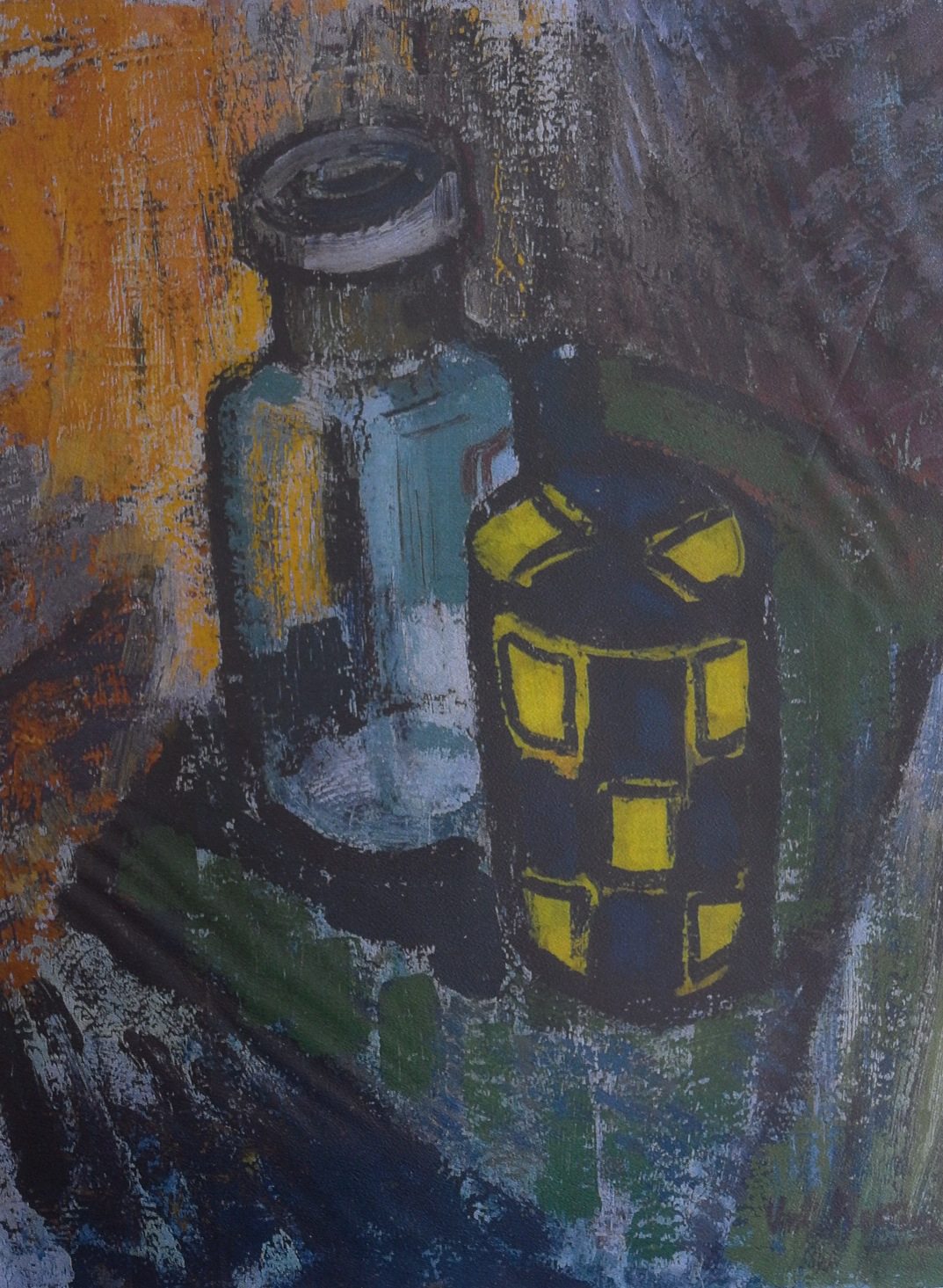
This freedom is also that of Mortier, who is a good thirty years his senior and who, too, continually questions himself. For Mortier, the object is no less important; it is the subject of numerous developments and metamorphoses, to the point of absorbing the figure, merging with it, and creating a new sculptural entity. One could say that, both literally and figuratively, he takes the object’s measure, evaluates it, weighs it, deconstructs it, and reconstructs it, projecting it into both physical and metaphysical space. Everyday objects such as La lampe verte (1948) and La boîte et le bocal (1945), architectural objects, instruments… all possess a distinctive presence, a captivating intimacy that transcends the mere arrangement of forms, lines, and colors. It is no longer the object AND the figure, but rather the figure WITHIN the object or the object WITHIN the figure—a singular and, more often than not, singularly expressive osmosis. With his characteristic blend of humor and analytical insight, Mortier likes to “depict” the object and “objectify” the figure. Glorieuse face (1951) is a fine example of this hybridization. Similarly, L’homme à la pipe (1951) and L’accordéon (1953) demonstrate how the object—whether an accordion or a pipe—imposes its profile on the entire figure.
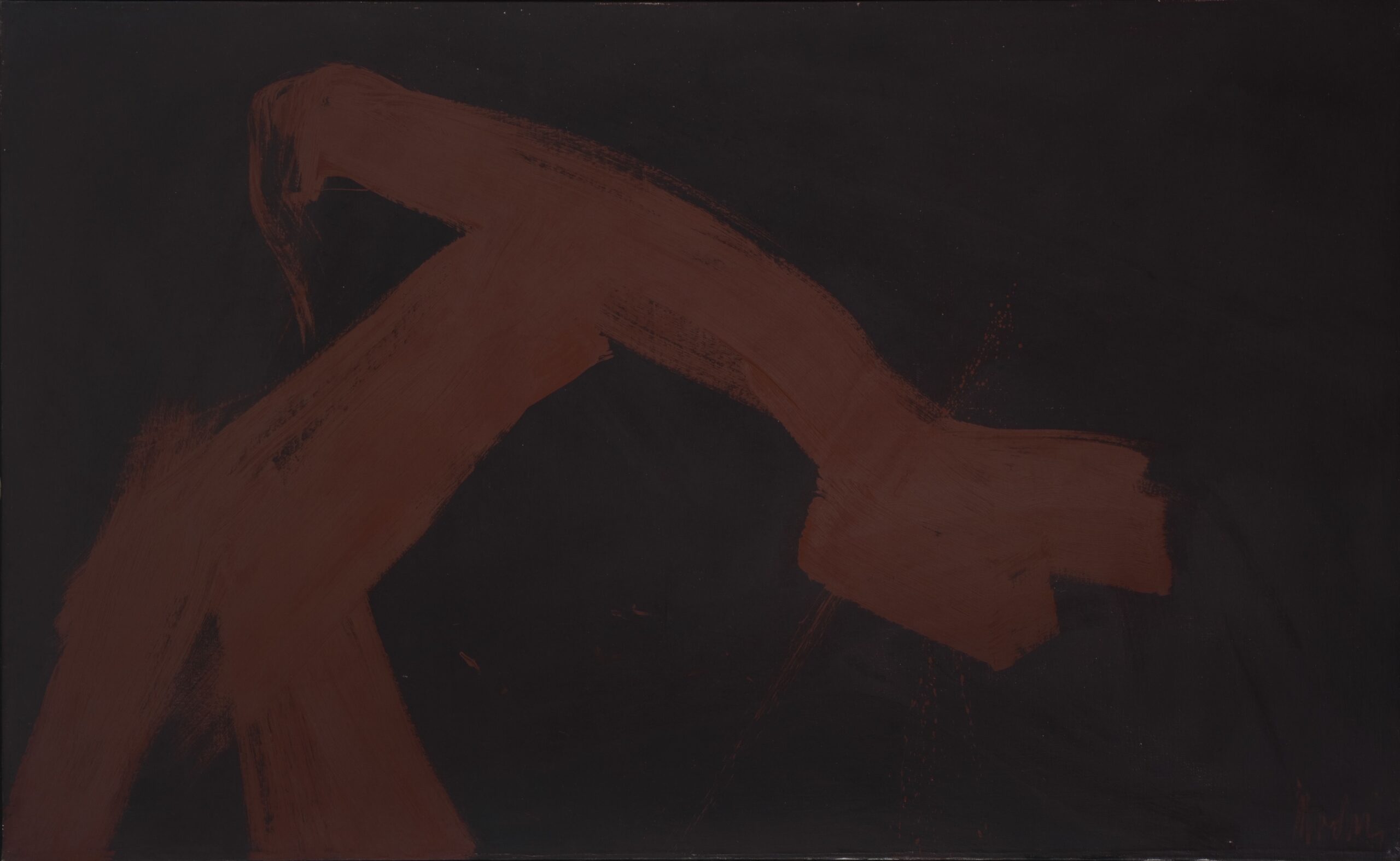
Later, large-scale, dark canvases associated with the monumental sculpture at the Yser metro station (Instrument I (1983) fig. 4 and Instrument II (1983–1987), an almost monochromatic painting) revealed a subtle palette of browns and blues, reflecting an entirely different approach. Ultimately, in this brief exhibition, the works allow us to grasp the evolution of Mortier’s art and the diversity of his approaches. While Boîte et bocal is a highly constructed painting in which his technical mastery reveals its full chromatic richness, the two much later paintings dispense with any formal syntax and suggest volume only through gesture in one case—a gesture that lacerates the canvas—and through the intricate modulation of colors in the other.
— Danièle Gillemon, Member of the Fine Arts Class of the Royal Academy of Belgium