Exhibition – Cabinet d’amateur privé : Le plein du vide. Antoine Mortier and Gabriel Belgeonne.
A full generation separates the two artists. Gabriel Belgeonne (Gerpinnes, 1935) fig. 1fig. 2 was, in the 1960s, a painter known for his restrained lyricism, a lover of muted colors tinged with incandescence, and a highly regarded printmaker whose aquatints and lithographs featured a recurring motif: the ammonite. Mysterious and tenacious, the shell etches its fossilized spiral into the thickness of the paper as if into the mists of time. Serving as an anchor for subsequent developments and variations, these prints emphasize artisanal and spontaneous qualities within a more or less structured framework.
In the early 1970s, the artist, together with his wife, Thérèse, founded the Tandem publishing house, where most of the artists who significantly shaped Belgian art in the late 20th and early 21st centuries engaged in lively exchanges with selected interlocutors. These are all off-the-cuff “Conversations,” precious archives of art as it happens.
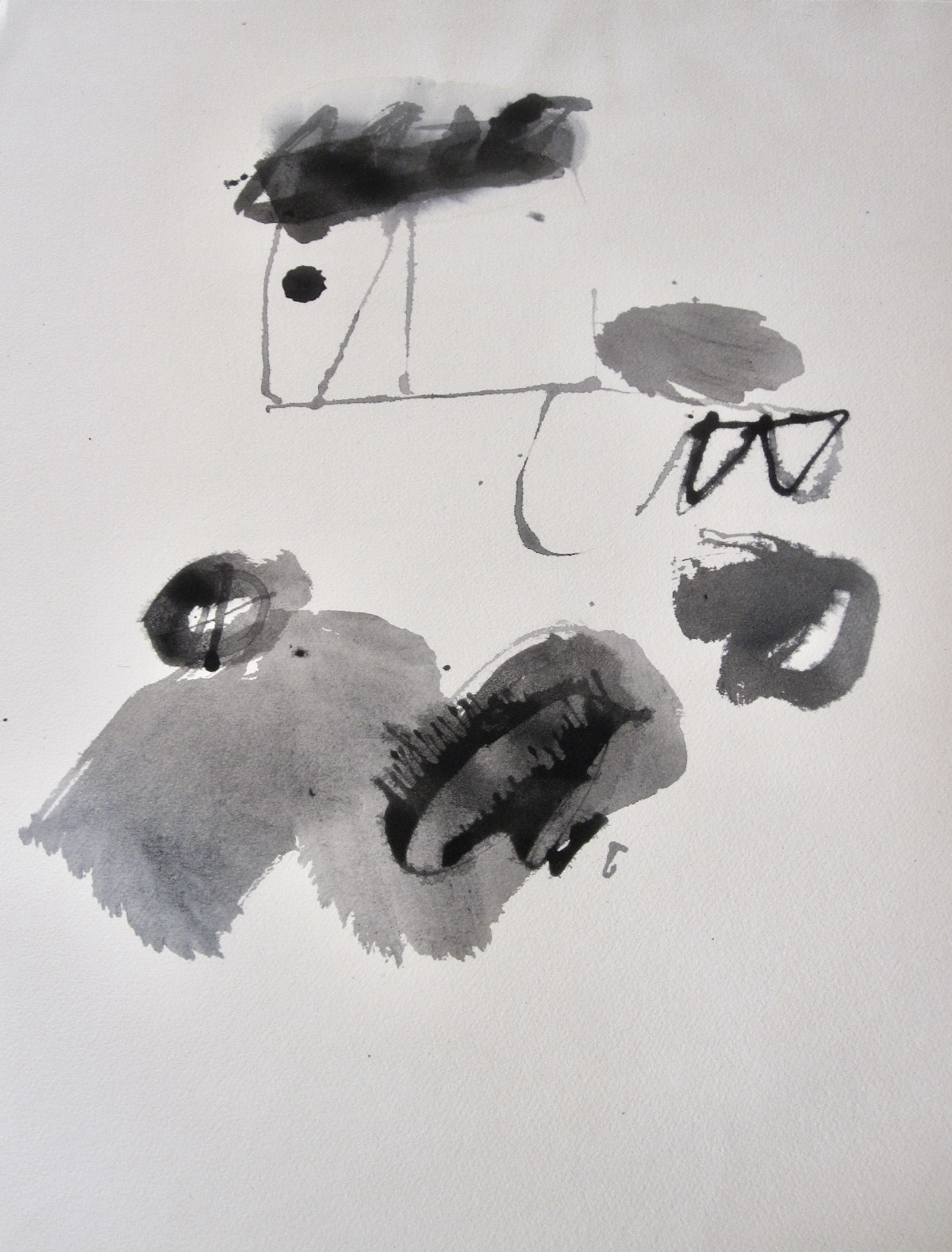
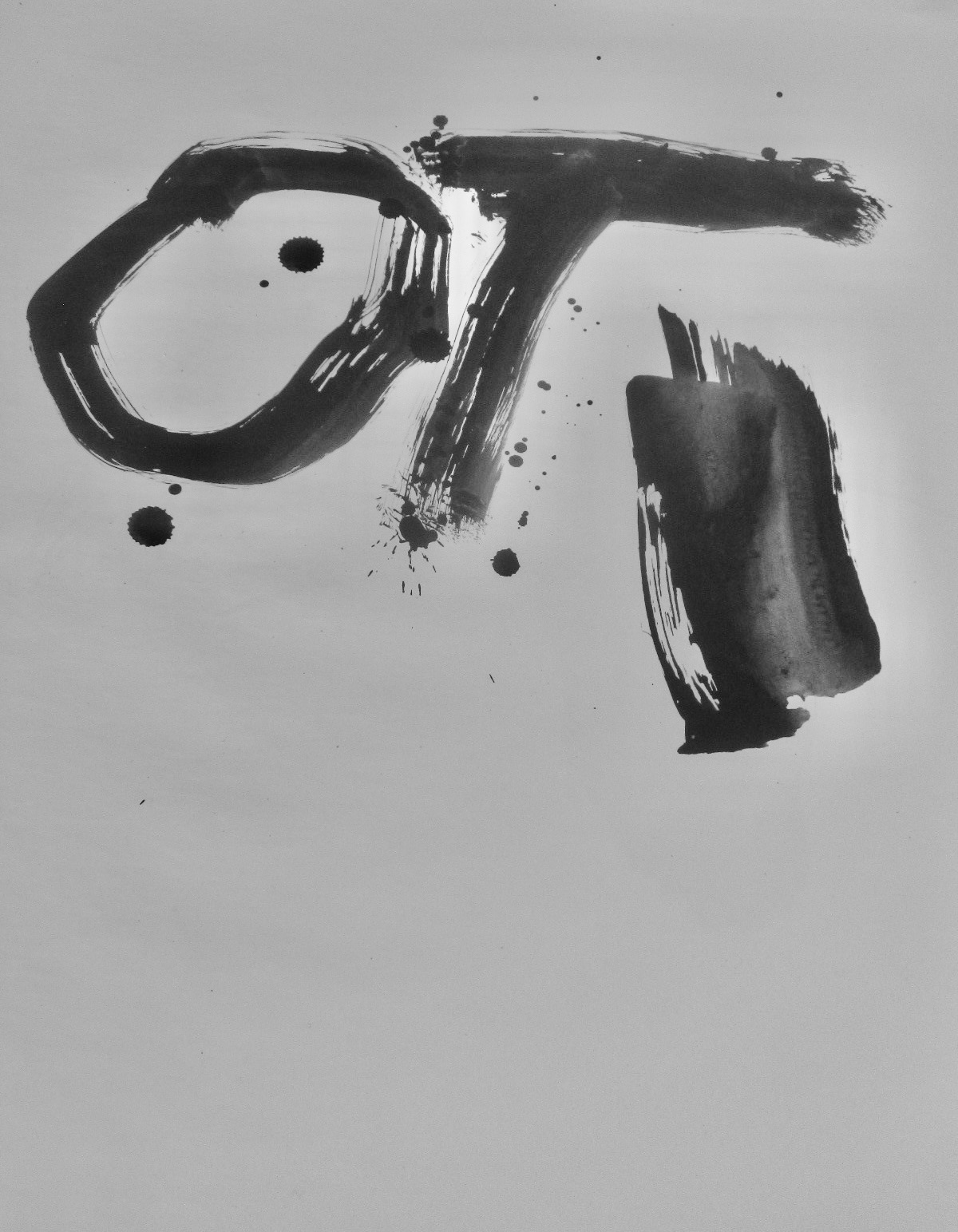
Belgeonne returned to painting in the 1980s in a different way, while continuing to create engravings. Her painting practice drew inspiration from her research, numerous contacts, her taste for silence, slowness, and simplicity, and above all for Eastern spirituality and art. She plays with a particular grace between fullness and emptiness, black and white, suspending, in this void that is not really a void, swarms of signs, traces, imprints, stains, and gashes that coalesce and disintegrate at will.
As the source of a unique form of expression, an alphabet has taken shape through its interaction with the surrounding space—a living, tangible, crafted void where layers of white overlap. Like any artist worthy of the name, Belgeonne knows that emptiness is… full, that it is the volume to be taken into account from the very beginning, the energy that exerts pressure on the gesture, the source of line and form, that which creates tension between them. This void is the first and last breath, the alpha and the omega, the space between earth and sky, the whole and the nothing, the breath of life, the light. And the illusion, since, to give it form, it must be materialized, contrasted with the full.
Gathered here, in addition to a large, very recent painting, are ink works on paper in which fragments and traces of these suspended agglomerations—these constellations—float scattered. They strike me as distant flashes, fragments of speech, terms from a long conversation with oneself. These are his words, his letters, and his numbers—it would be futile to try to decipher them, lest one immobilize what is deliberately volatile, ascending, written in the wind…
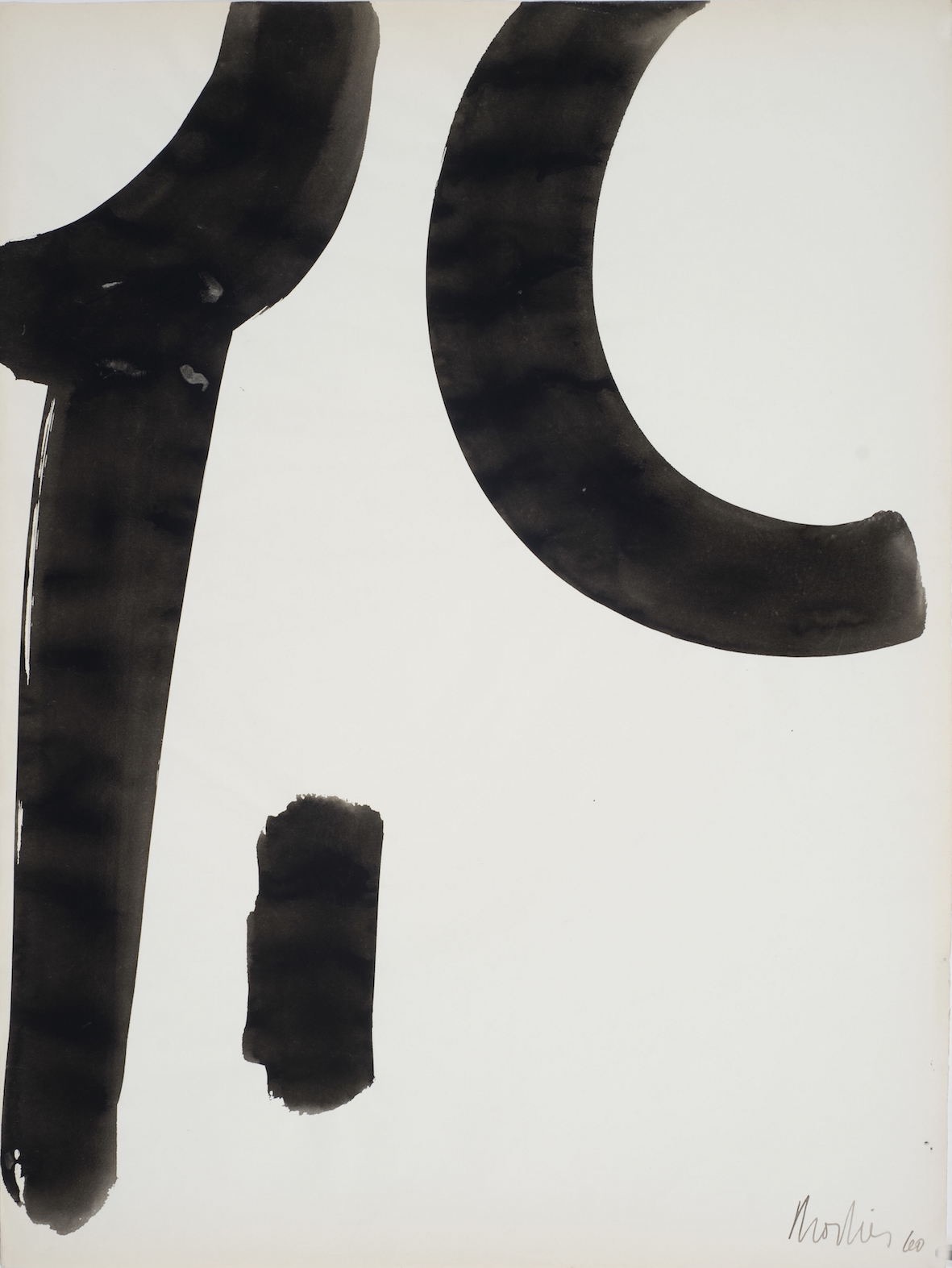
Mortier (1908–1999) always begins with the concrete—the object, the figure—that is, with the full—yet he loves nothing more than to engage adventurously with the void, which lends his approach the utmost expressiveness and conciseness. It is through his engagement with emptiness—the sometimes dizzying white that frames his most dense ink works—that he gains the freedom to sometimes radically transform the original model, turning it inside out in order to examine each segment within space.
Here we will examine a few of these enigmatic yet vivid “segments” that evoke, at times, the stem of a lost letter, and at other times, a fragment of architecture still in the making. By ceaselessly planing away at the solid, reducing it, and playing with the pressure of the void, Mortier arrives at objects and figures so thoroughly transformed that they seem to belong to a new dimension. Objet dans l’espace [ fig. 3], a painting from the 1990s, gives a good sense of this. The same is true of several ink drawings fig. 4, including the highly structured Compotier (1946), in which the openwork solid—pierced by the void—serves to multiply the viewpoints and deconstruct the architecture of the model. As for this 1980 ink drawing, in which black and white seem to exert pressure on one another like a window opening onto the night, it is a nearly literal illustration of the illusion that presents emptiness as… emptiness.
The works of Belgeonne and Mortier differ greatly in both source and nature. Yet when viewing their ink drawings on the gallery walls, one notices undeniable affinities, no doubt due to the two painters’ shared desire to construct a formal alphabet and a style based on the remnants of the visible, thereby achieving their own spirituality.
— Danièle Gillemon, Member of the Fine Arts Class of the Royal Academy of Belgium