Exhibition – Private Collector’s Collection: Artist’s Proofs – Jean Dominique Burton
1990-2023
Jean-Dominique Burton
Gaston Bertrand, France Borel, Jacques Calonne, Thérèse Chotteau, Jo Delahaut, Camille De Taeye, Jephan de Villiers, André Lambotte, Jacques Moeschal, Antoine Mortier, Lionel Vinche, André Willequet
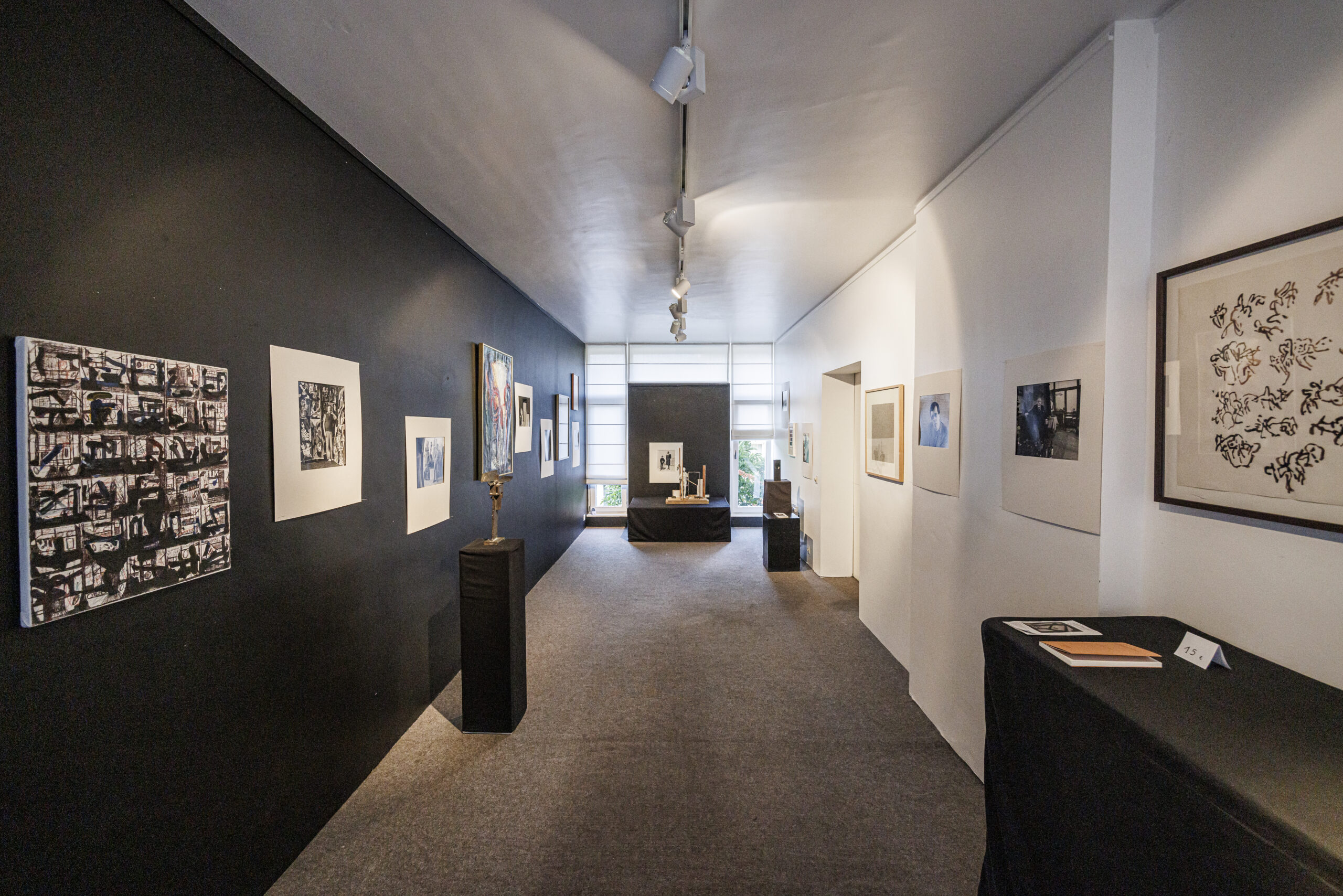
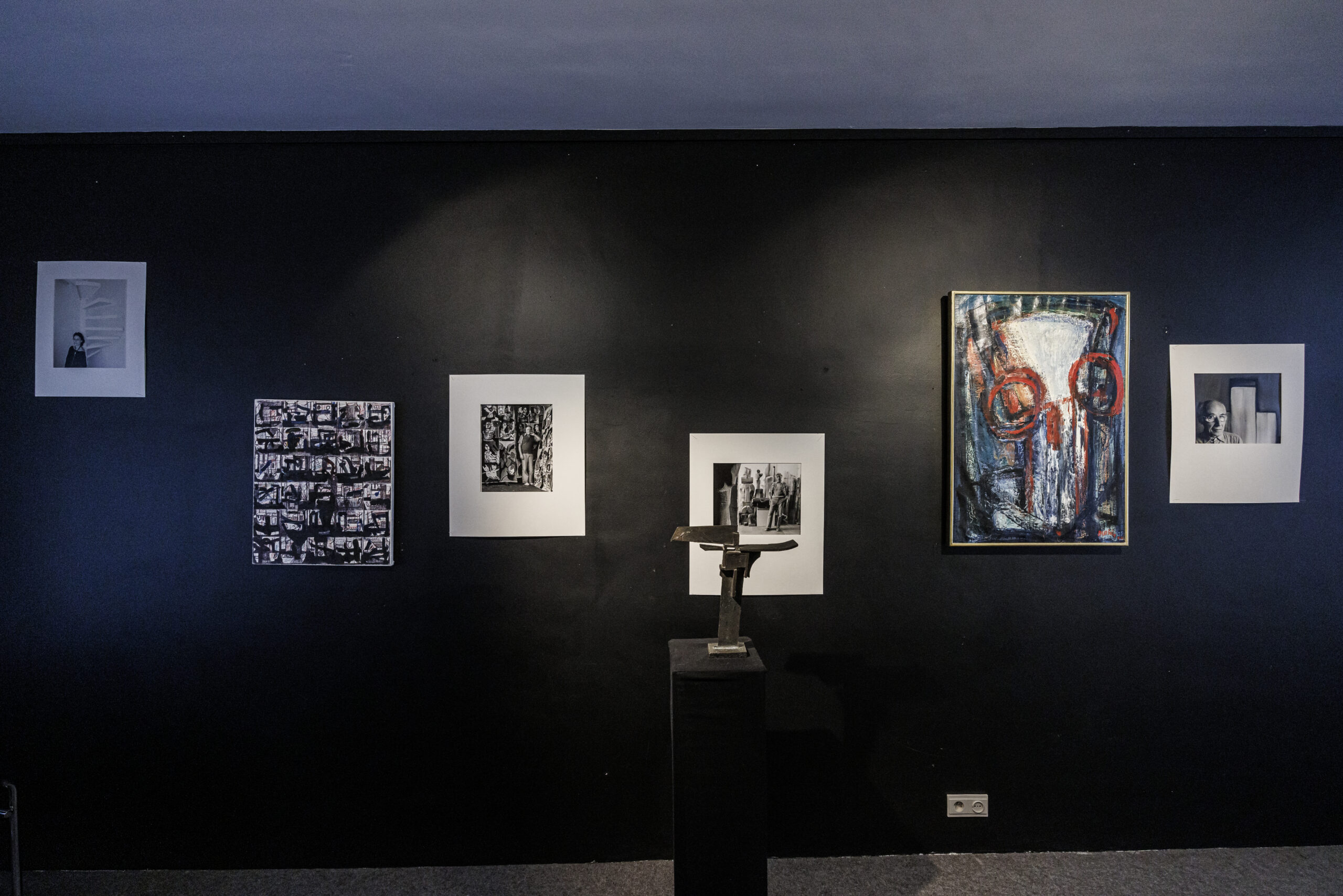
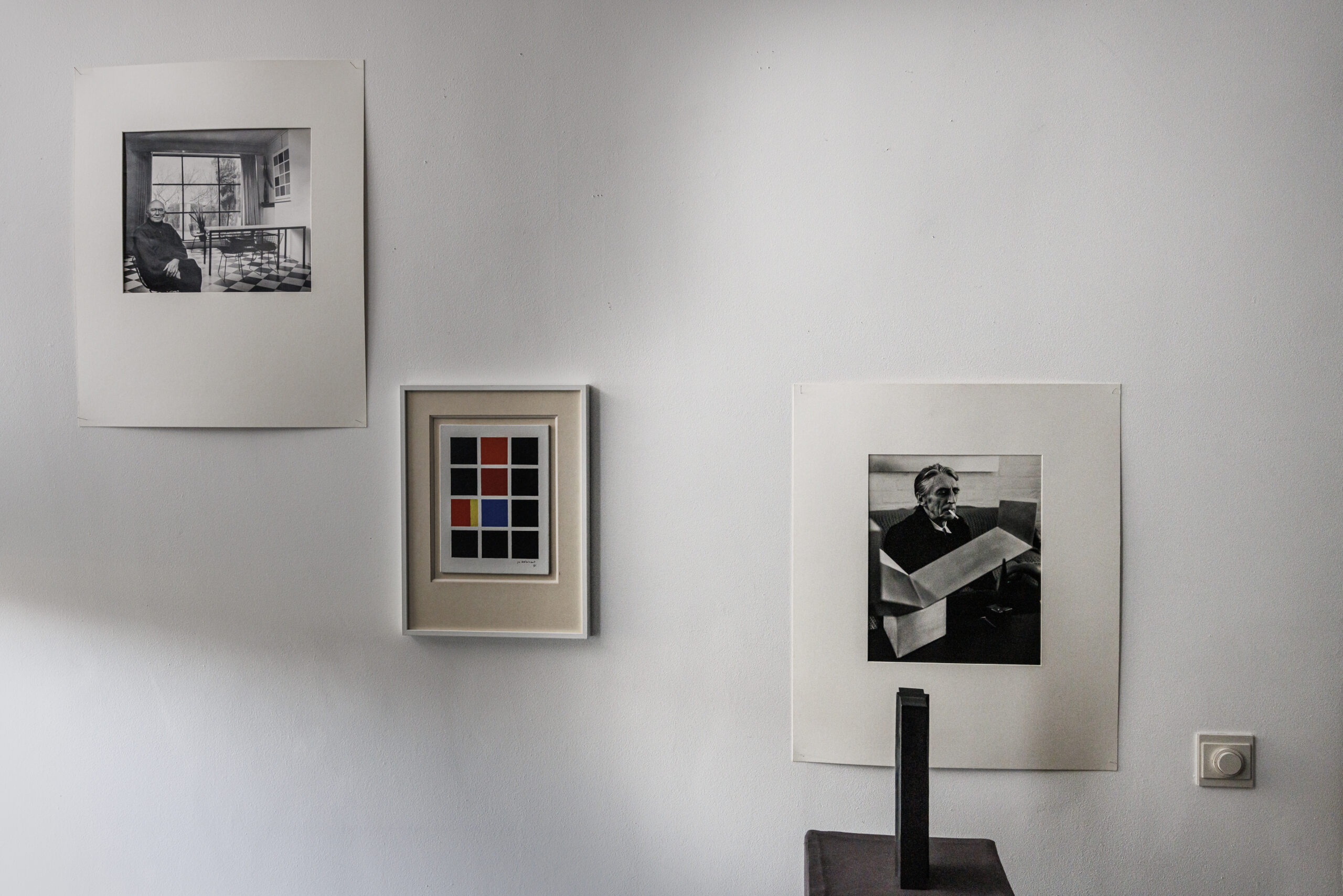
On display at this one-day exhibition are twelve photographic portraits of Belgian artists taken by Jean-Dominique Burton in the 1980s. With one or two exceptions, each visual artist is depicted alongside his or her works and, at times, under the gaze of those works.
Thérèse Chotteau, for example—small and smiling next to her large sculpture—seems to us a bit like a mother being questioned by her daughter, unless it is the other way around. Doesn’t a work of art, like a child, always elude the artist who brought it into being?! With Thérèse’s other sculpture, not shown here, everything is expressed through a more abstract and structured language that explores the body, its projection into space, and its relationship to the mind… fig. 1
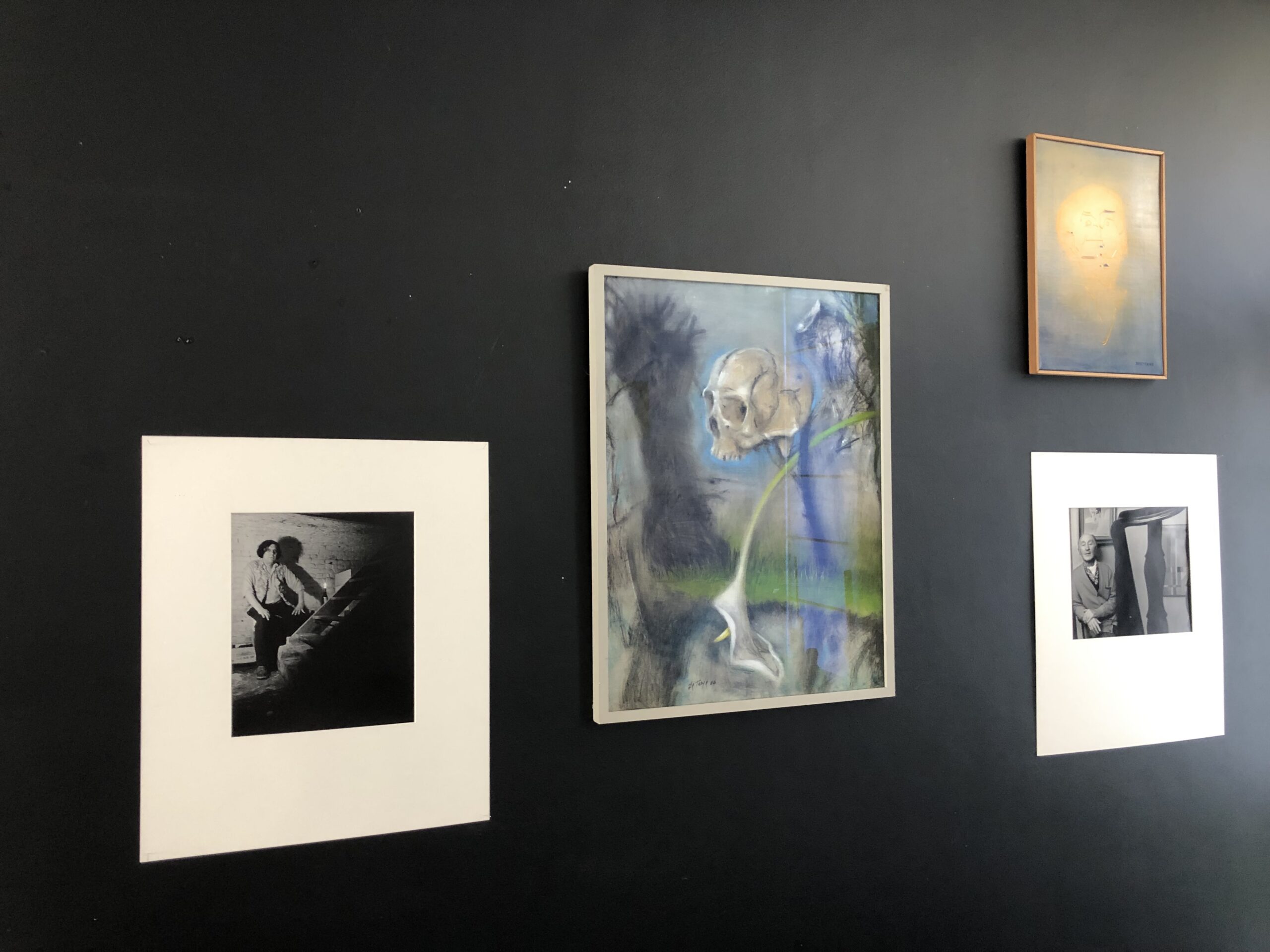
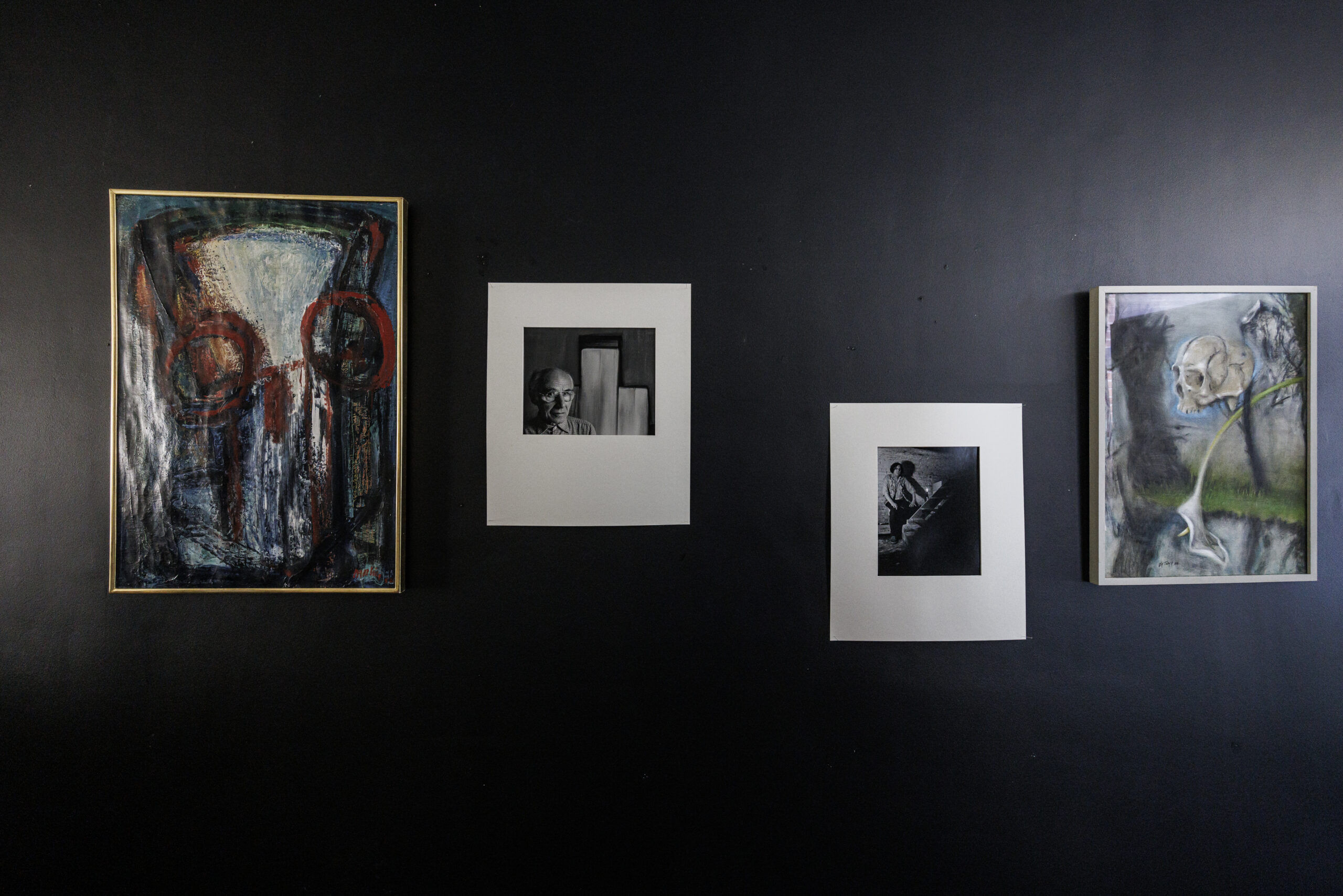
Gaston Bertrand, gazing down at the camera with raised eyebrows, seems to be trying to recreate the stylized, refined, sharp, and fragmentary features of his self-portrait. fig. 5 Lionel Vinche, ensconced among his paintings, appears as the main character in his far-fetched tales…At the foot of the stairs leading to his cellar, Camille De Taeye, pensive and without a single work on display, is captured in a dim light conducive to the preservation… of wine and the maturation of powerful images—a skull, an arum, a tree. His breviary. fig. 2
As for Jacques Moeschal, he is shown in profile, leaning slightly on the hand holding his favorite cigarette. A profile sculpted in steel, much like the concise and understated “engineering” work facing him. Jephan de Villiers, for his part, standing at the center of an offering to the Arbonie Forest, has something of a Tibetan monk about him.
A humorous dialogue pairs André Lambotte, wearing a herringbone jacket, with a large, colorful, dotted drawing—a recurring theme in which he has made a specialty of himself.… fig. 3
With André Willequet, the entire studio is a work in progress—a work of art in its own right. With its masterful design, his “Thabor” evokes a sacred mountain in Galilee, a place of transfiguration, and, by extension, the liturgical object that serves as a lectern. fig. 4
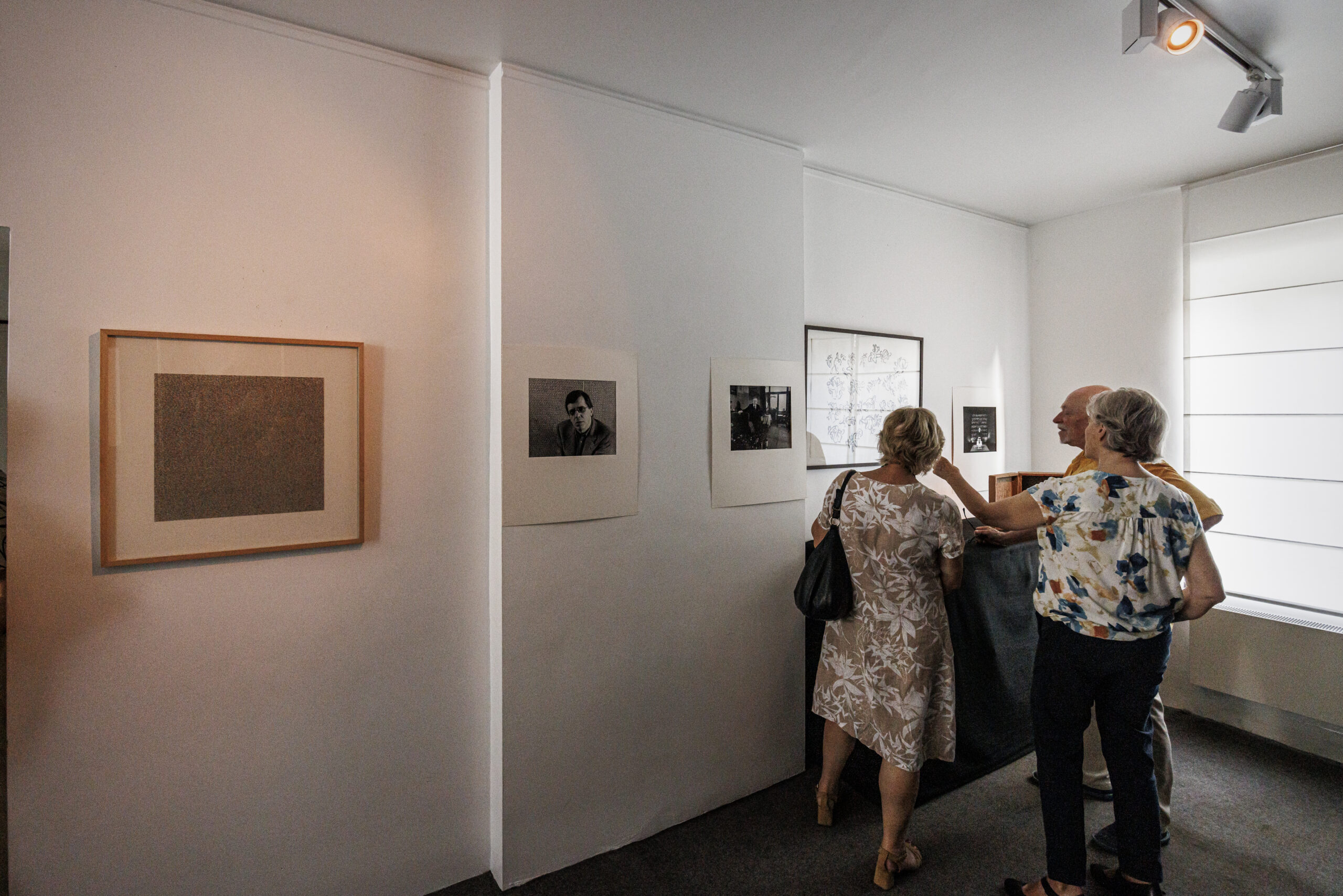
Immersed in his living space, Jacques Calonne achieves a perfect symbiosis. He “is” this setting from which his swarms of images escape, as fleeting as musical notes. Jo Delahaut’s minimalist square—a perfect form lending itself to spatialist plays on color—gives rhythm to a harmonious photograph, as luminous as the man he once was… fig. 6
Finally, Antoine Mortier shows his head very close to his large painting—a no-frills image that links the man to his painting as closely as possible.
Dedicated to the soul’s journey, these images were captured by Jean-Dominique Burton’s camera 35 years ago, after spending many long hours with the subjects. They make up a collection titled Epreuves d’artistes, with commentary by France Borel, comprising 101 portraits that have never been exhibited. A renowned photographer born in 1952, who remains as active as ever today, Burton was commissioned by the French Community to create an inventory of visual artworks, which he very wisely expanded to include their creators. From the hundred or so images that make up this beautiful and striking collection, Françoise Mortier selected eleven portraits to serve as companions to a twelfth—that of her father. Together, these twelve painters and sculptors sketch the complex and diverse face of modern and postmodern Belgian art.
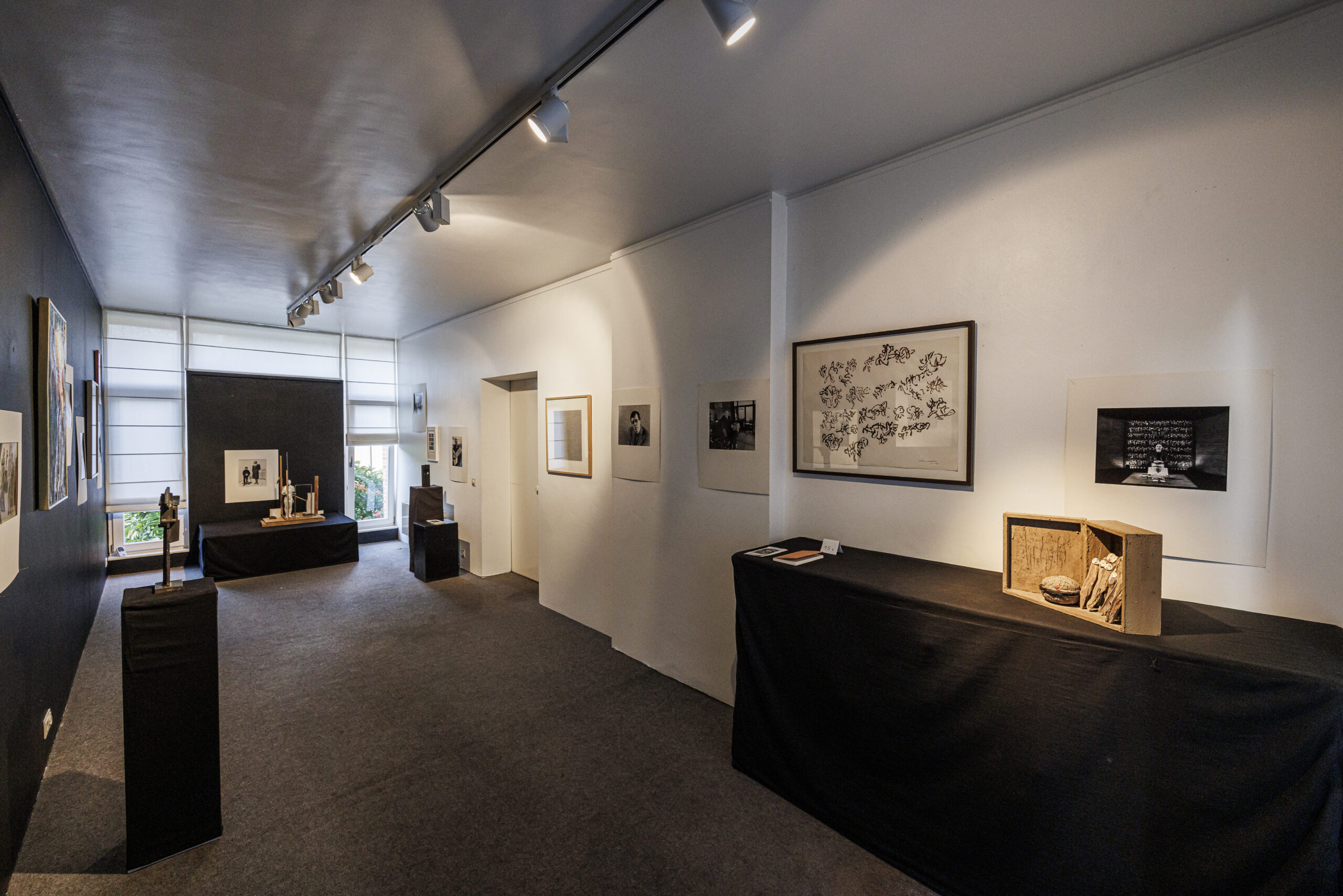
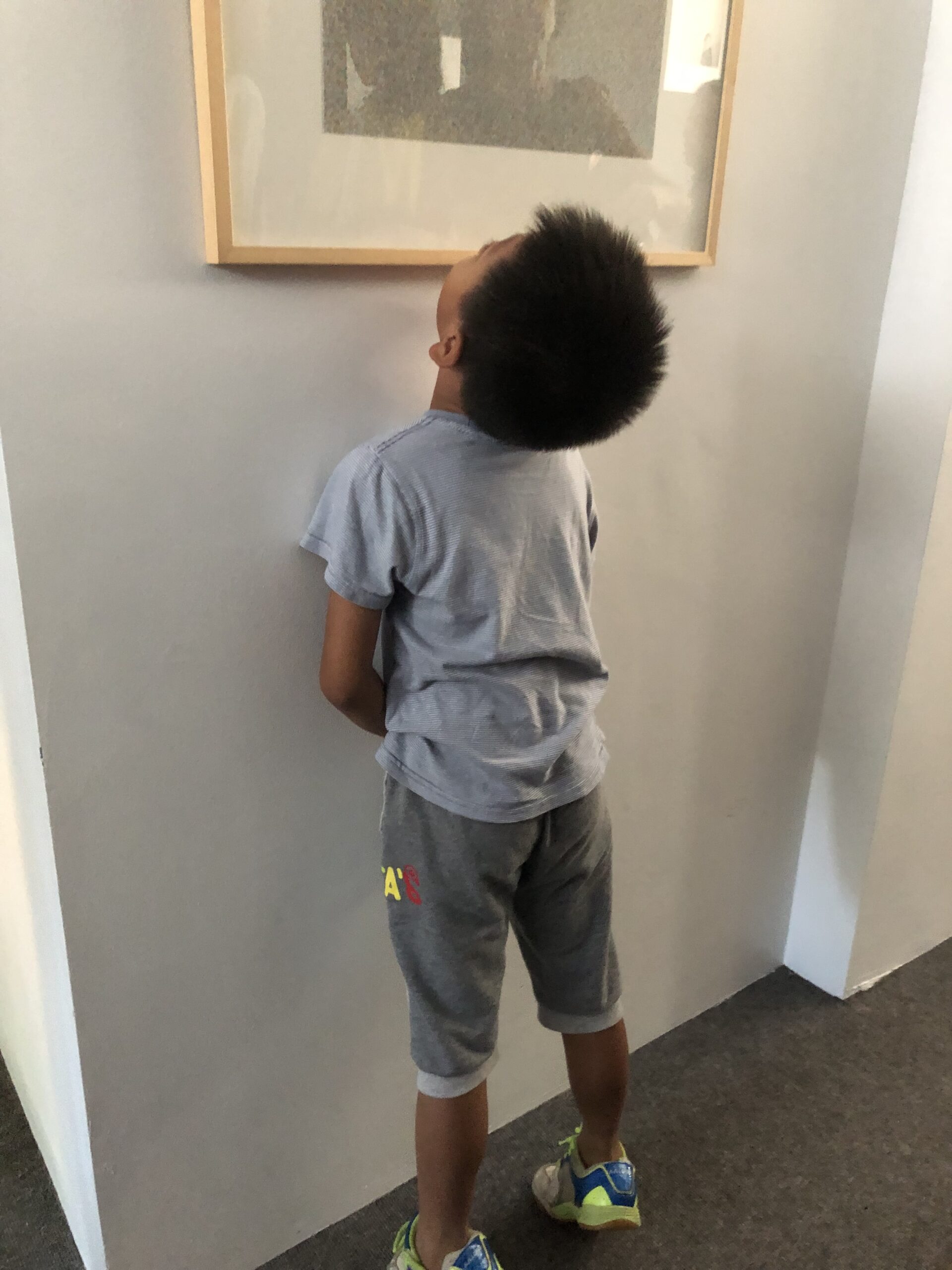
This collection thus serves as the starting point for a sort of game that invites visitors to move from the artists’ portraits to the works themselves—those depicted in the photographs, as well as those located within the actual exhibition space and which echo the portraits. For the connection established by the photograph between the artist and his or her painting or sculpture—however transparent it may sometimes be and however imbued with humor—nevertheless poses a riddle that the magic of photography (light, composition, formal play, etc.) highlights. By capturing each subject’s habitus, their living environment, and their symbiosis with the artwork, the photographer skillfully lifts only a corner of the veil to allow the elusive to resonate. In other words, all these faces, postures, and works of art are, in turn, enigma and revelation, mask and unveiling—in short, human truth. fig. 7fig. 8